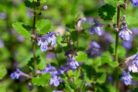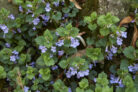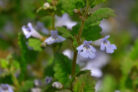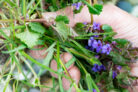
When it’s not in bloom, Ground Ivy is a pretty low-key wild plant. But once flowering season hits, this little creeper transforms into a real beauty. Because it grows in dense patches, it creates what looks like a lush green-and-purple carpet across the ground. Those tiny tubular flowers aren’t just easy on the eyes, though—they’re actually a treat for your taste buds, too!
A Long-Lasting Bloom
You can usually spot Ground Ivy (also known as Creeping Charlie) showing off its colors during these months: April, May, June, and July. Depending on how early spring arrives, the blooming period can kick off as early as March or stretch well past July. That said, the “peak” show usually happens in April and May.
Classic Mint Family Flowers
Scientifically known as *Glechoma hederacea*, Ground Ivy is a member of the mint family (Lamiaceae). You can tell just by looking at the distinct shape of the blossoms.
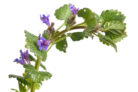
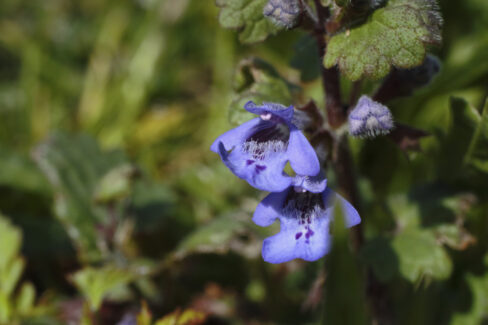
- It produces clusters of tiny (1–2 cm) “lipped” flowers.
- You’ll find them in groups of two to five tucked into the leaf axils.
- The color is typically a bluish-purple, though you’ll occasionally spot pink or white ones.
- The calyx (the base of the flower) is shaped like a little tube or bell.
- The “lower lip” of the flower features irregular reddish-purple spots.
Quick Tip:
Take a close look at your find, because Dead-nettles have very similar flowers. The easiest way to tell them apart? Dead-nettle leaves are pointed, while Ground Ivy leaves are rounded and scalloped. Don’t worry if you mix them up, though—Dead-nettles aren’t toxic either.
Yes, the Flowers are Edible!
The green leaves of Ground Ivy are edible and have a bold, aromatic, and slightly bitter flavor. They’re great for adding a little kick to certain dishes in small amounts. The flowers, however, are packed with nectar and act like a magnet for bees. They offer a much sweeter flavor profile for us humans, too. Because of their gorgeous color and unique shape, they are a favorite choice for edible garnishes on salads or desserts.
Ground Ivy in Your Garden
Creeping Charlie can actually be a great addition to your home landscape. It’s a champion at filling in those damp, shady corners where other plants just refuse to grow. However, a fair warning: this plant spreads like wildfire and can be pretty tough to get rid of once it takes hold.
Quick Tip:
Want to dive deeper into the world of this versatile plant? Check out our Ground Ivy profile for a quick breakdown of all the essentials.