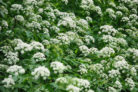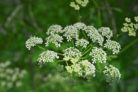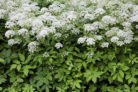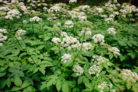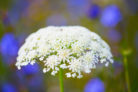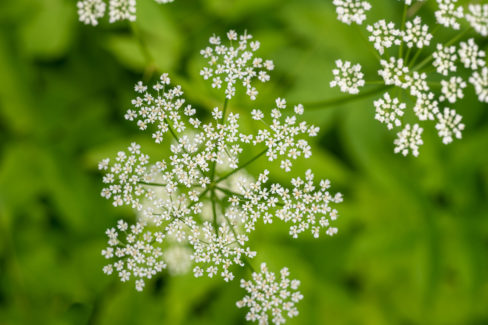
In early summer, something pretty magical happens in the garden: those tiny buds on the side branches of Goutweed (also known as Ground Elder) start to pop. Starting in mid-May, these wild blooms transform your garden beds into a dreamy sea of white. At first glance, the tiny flowers might remind you of Queen Anne’s Lace, Burnet Saxifrage, or Cow Parsley, but Goutweed blooms definitely have a personality all their own.
When do Goutweed flowers appear? – The blooming season
Goutweed produces flower clusters that tower gracefully over its leaves. These dense blooms usually start showing up in mid-May and develop into a thick white carpet of mini-flowers throughout the summer. Typically, the flowering season lasts until the end of July, though in some cases, you might still see them sticking around well into September.
What do Goutweed flowers look like? – Physical characteristics
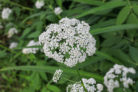
Goutweed belongs to the *Apiaceae* family, often called “umbellifers” because the flowers grow in umbrella-like clusters called umbels. The flower heads are relatively flat, with twelve to twenty-five tiny “rays” branching out from the center. The individual flowers are a crisp, pure white, which looks stunning against the plant’s lush green foliage. These tiny blossoms are five-petaled and lack the small leaf-like bracts you see on some other plants.
The petals have a lovely, inverted heart shape that frames the center of the flower perfectly. While they offer a moderate amount of pollen and nectar for pollinators, their bright yellow pollen really stands out in the center of the bloom. Interestingly, Goutweed is hermaphroditic, meaning it can self-pollinate and spread easily through its own seeds.
Goutweed flowers as an edible garnish
Just like the leaves, stems, and roots, Goutweed flowers are completely edible. In fact, they actually taste a bit sweeter than the rest of the plant! This makes them a fantastic culinary secret for infusing oils, vinegars, or even homemade herbal lemonades with a unique flavor.
Plus, these cute miniature blossoms make the perfect garnish for salads, stews, dressings, or soups. You can get as creative as you want—they look just as good decorating the rim of a plate for a main course as they do floating in a bowl of soup. And here’s a fun health fact: Goutweed flowers contain fifteen times more Vitamin C than lettuce and four times more than a lemon. Talk about a superfood hiding in plain sight!