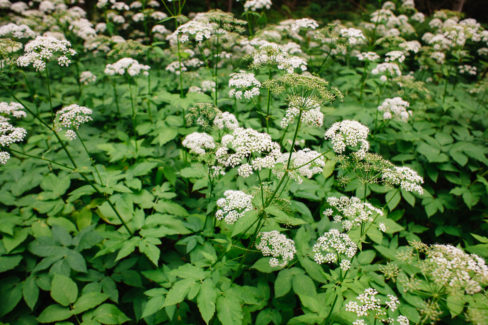
Goutweed (also known as Ground Elder) is a bit of a double-edged sword for gardeners. On one hand, it’s a notoriously stubborn weed; on the other, it’s actually a fantastic medicinal herb. Plus, it’s totally edible and has a fresh, parsley-like flavor that’s great in the kitchen. To help you figure out if you’re looking at a pesky invader or a healthy snack, I’ve put together a guide on its most important features.
Feature #1: The Foliage
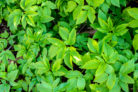
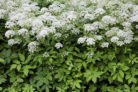
The best way to identify Goutweed is by looking at the leaves. They are divided into a leaf blade and a stem, and that stem can grow up to 8 inches long. The leaf blade itself splits into three distinct leaflets. These leaflets are a medium to blue-green color and have tiny hairs on their undersides.
The tops of the leaves, however, are smooth and hairless. Each leaflet is oval-shaped and elongated with jagged, serrated edges that taper to a sharp point. When you put all these traits together, you get a very specific look that is unique to Goutweed.
Feature #2: The Flowers
Every year starting in May and lasting well into September, Goutweed produces tiny flowers. Now, identifying the plant by its small flowers alone can be a bit tricky because there are several plants in the carrot family (Apiaceae) that look very similar. Here’s what to look for:
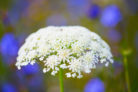
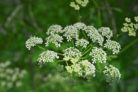
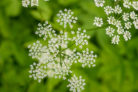
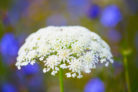
Goutweed flowers sit at the very ends of long stems. They form flat-topped clusters called umbels, with about 10 to 20 tiny mini-umbels per flower head. During the summer, these turn a bright white, though you’ll occasionally see them with a slight reddish tint. Each tiny flower has five petals.
Fun fact: Goutweed flowers are hermaphroditic, meaning they can self-pollinate. They don’t need a neighbor to produce seeds and spread!
Feature #3: Fruit & Seeds
Once the flowering season wraps up, the seed heads start to form. The seeds start out green but turn a dark brown or brownish-black once they’re fully ripe. You’ll need to look closely to use the seeds for identification.
If you peek at them through a magnifying glass, you’ll see that the fruits are “schizocarps”—basically, they split into two parts. These little pods are about 4mm long, oval-shaped, and smooth.
By the way, Goutweed is actually a relative of caraway, which you can really see in the seeds—they look almost identical to the spice!
What does Goutweed look like? Other helpful tips
If you’ve checked the leaves and seeds and you’re still not 100% sure, here are a few more clues to help you solve the mystery:
- Check the stem: If the stem is hollow and has a distinct triangular shape when cut crosswise, it’s likely Goutweed.
- Look at the roots: It has long, white, creeping roots that are only about 2mm thick.
- Timing is everything: Goutweed is an early riser in the spring and has a blooming period that lasts for several months.
- Height: It can grow up to 3 feet tall, especially when it’s in full bloom.
- Growth habit: It’s often semi-evergreen and spreads like wildfire via underground runners.
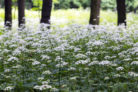
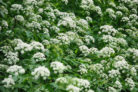
Because it spreads so aggressively through both runners and self-seeding, you’ll rarely find just one Goutweed plant standing alone. If you see a whole colony of them, that’s a big hint.
Feature #4: Where it grows
Where a plant chooses to live can tell you a lot about what it is. Goutweed’s favorite spots are tucked away in hedges and bushes. You’ll also find this wild herb in mixed and deciduous forests or along the banks of rivers and streams.
That said, it’s just as happy in gardens, parks, manicured lawns, and along roadsides. Another clue is the environment: Goutweed loves the shade and thrives in moist, nitrogen-rich soil.
Watch out: Look-alike plants
There are a few plants that can easily be mistaken for this medicinal weed. Elderberry leaves, for example, look quite a bit like young Goutweed shoots. Giant Hogweed and Burnet Saxifrage also have foliage that mimics Goutweed.
Additionally, Wild Carrot produces white flower umbels that look almost exactly like Goutweed’s. Keep an eye out for these differences, especially if you’re trying to clear it out of your garden.
One final word of advice: If you’re planning on using Goutweed for cooking or home remedies, you must be absolutely certain of your identification. Many of its look-alikes are actually toxic and definitely not something you want on your dinner plate!