If you’ve put in the work to plant and care for your strawberries, there’s nothing better than seeing those plants loaded with fruit. Now comes the best part: the harvest! But believe it or not, there’s a bit of an art to picking these red gems. To make sure you get the best flavor and shelf life, here’s everything you need to know about when and how to harvest your strawberries.
How to Spot a Strawberry That’s Ready for Picking
It might sound like a no-brainer, but the golden rule is to only pick fruit that is perfectly ripe. You want to avoid berries that are underripe or past their prime. Here are a few pro-tips to help you spot a berry that’s ready for your basket:
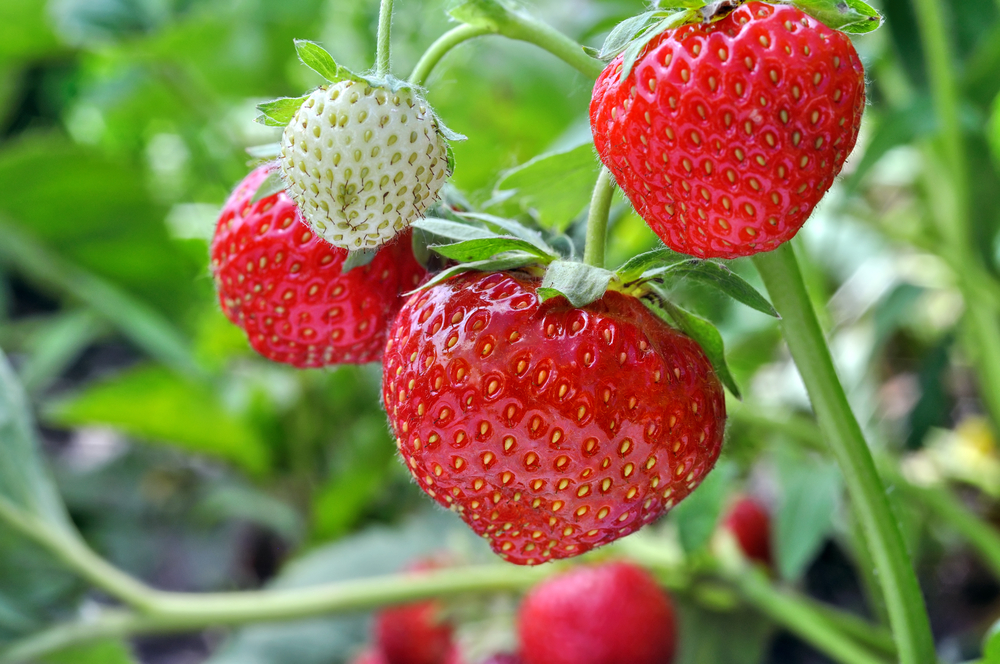
- They should be fully colored—usually a deep, vibrant red. (Keep in mind, some specialty varieties like pineberries might be white or yellow when ripe!)
- Look closely at the top near the stem; there shouldn’t be any white or green “shoulders” left.
- Give them a sniff! A ripe strawberry will have that unmistakable, sweet, summery aroma.
- Give the fruit a very gentle squeeze. It should feel plump and slightly soft, but definitely not mushy or rock-hard.
Of course, the exact harvest window depends on which variety you’re growing. Generally, the strawberry season kicks off in May. It’s actually better to pick them a tiny bit early rather than too late. Overripe strawberries get mushy fast, develop soft spots, and start to lose that fresh scent, replaced by a slightly musty or fermented smell.
The Right Way to Harvest Your Berries
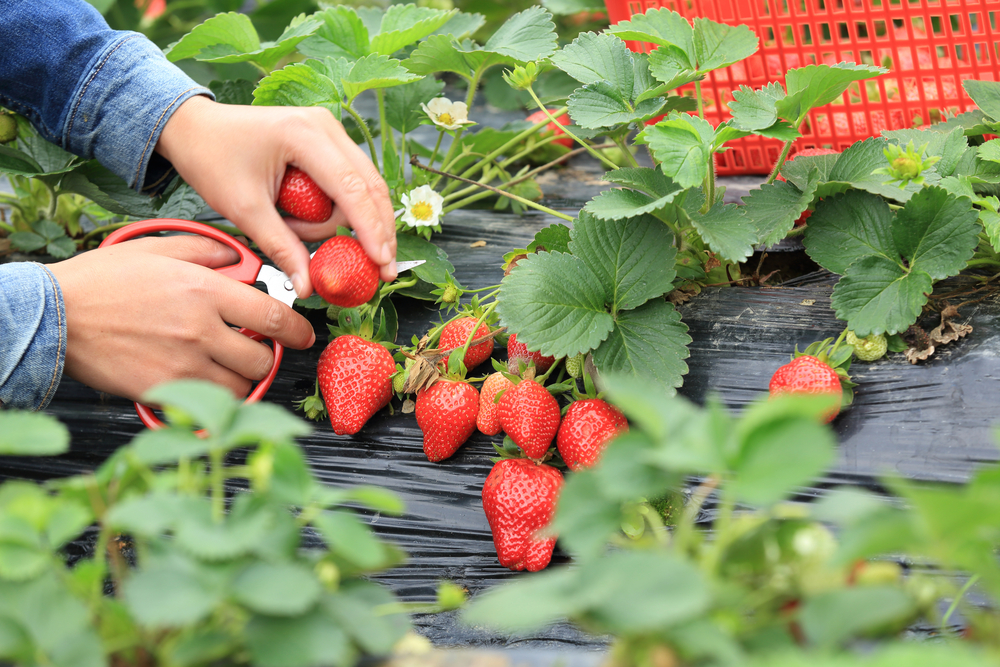
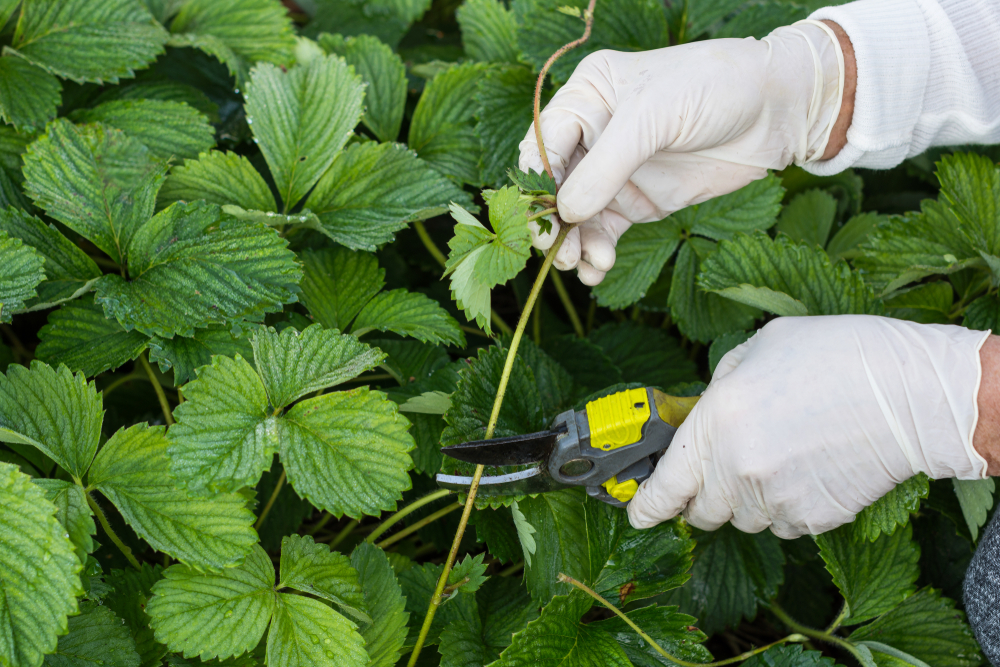
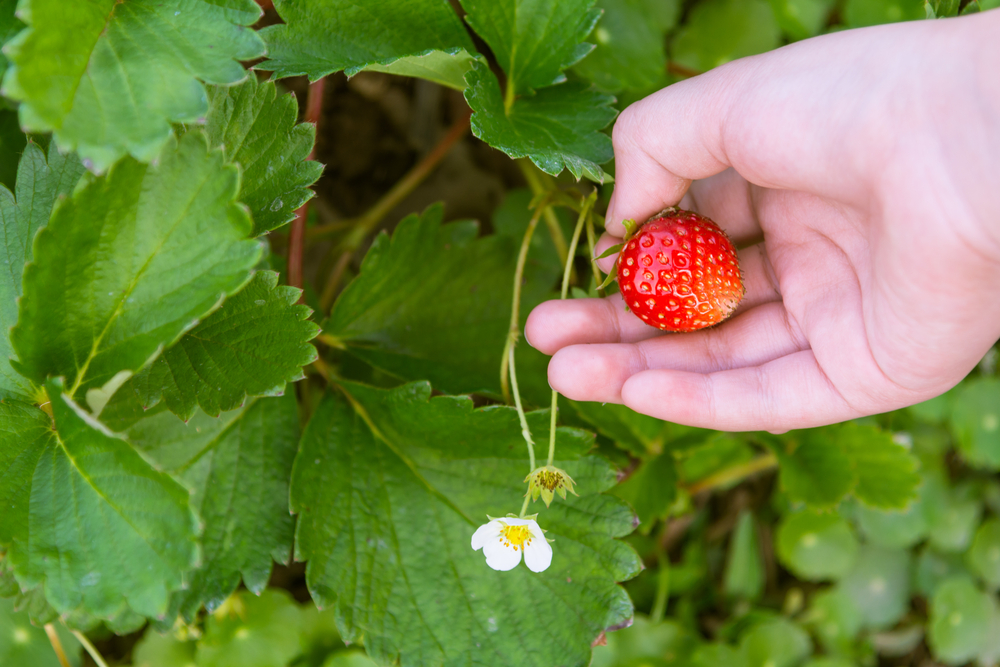
When it comes to strawberries, *how* you pick is just as important as *when*. Always pick the berry by the stem rather than pulling on the fruit itself. You want to keep that little green leafy cap (the calyx) attached. If you pull the cap off, you “wound” the berry, which causes it to spoil much faster and lets all that delicious juice leak out. There’s a reason the berries you see at the farmers’ market still have their green tops!
Timing is also everything. For the best flavor, try to harvest in the early morning while the berries are still cool. Once the midday sun hits, they can lose some of that intense aroma. I also recommend avoiding a harvest on rainy days if you can help it, as the extra moisture can water down the flavor.
One last tip: keep a close eye out for any damaged fruit. If a berry has a small bruise, eat it immediately! If you see any mold, don’t just cut the bad part out—toss the whole berry. Mold spores spread quickly through the soft flesh of a strawberry, and you definitely don’t want those “bad apples” touching your perfect harvest.