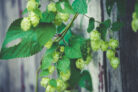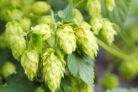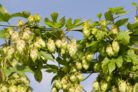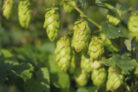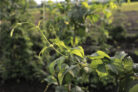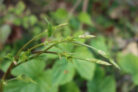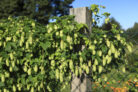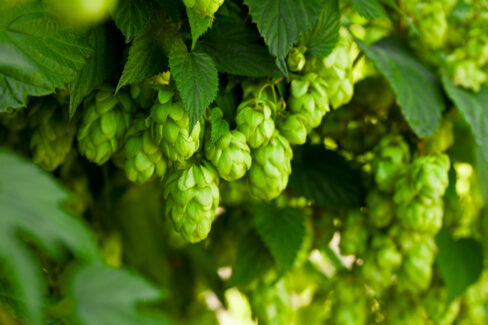
Hops are so much more than just the secret ingredient in your favorite IPA! They are incredibly useful climbing plants that bring a lot to the table—or rather, the garden. Beyond brewing, hops have a long history as a medicinal herb. Because they grow so incredibly fast, these perennials are a go-to for gardeners looking for a natural privacy screen or some quick summer shade. Plus, they’re versatile enough to thrive in the ground or in large containers.
Hops: The Quick Facts
- Common Name: Common Hops (Botanical: *Humulus lupulus*)
- Family: Cannabaceae (yep, they’re related to hemp!)
- Main Varieties: Common Hops, Wild Hops, and Japanese (ornamental) Hops
- Biology: Hops are dioecious (meaning there are separate male and female plants)
- Lifespan: Can live up to 50 years
- Size: Can reach heights of up to 23 feet
- Foliage: Leaves look a bit like grape leaves
- Shoot Harvest: Early spring
- Bloom Time: June
- Female Flowers: Green and cone-shaped
- Male Flowers: Grow in loose clusters (panicles)
- Fruit Harvest: August/September
- The “Cones”: Greenish-yellow fruit
- Growth Rate: Can grow up to 3 feet per week!
- Climbing Style: Twines clockwise
- Hardiness: Very winter-hardy
- Garden Use: Great for privacy and shade
- Edible Uses: Cones for tea, young shoots as a vegetable
The Three Main Types of Hops
Hops are native to the Northern Hemisphere, and you’ll generally run into three main types: Common Hops, Wild Hops, and Japanese Hops. If you see them in a backyard or on a commercial farm, you’re likely looking at Common Hops. This is the variety used for beer production, with world-famous growing regions located in places like the Hallertau in Germany or the Pacific Northwest here in the States.
One big difference to keep in mind: Japanese Hops are annuals, meaning they only last one season. They’re mostly grown from seed for decoration. Common Hops, on the other hand, are perennials and are usually propagated via cuttings.
Fun Fact: They Only Twist One Way!
Hops definitely need a trellis, pole, or sturdy string to reach their full potential. But here’s the quirky part: they always climb clockwise. If you try to train the vines (technically called “bines”) counter-clockwise, the plant will actually stop growing! As soon as you point them back in a clockwise direction, they’ll get right back to their skyward climb.
Yes, You Can Eat Them!
A lot of gardeners don’t realize they’re sitting on a gourmet treat. In the early spring, you can harvest the young shoots and prepare them just like asparagus. They have a wonderful nutty flavor and are considered a real seasonal delicacy.