While most hydrangeas are technically winter-hardy, a long, deep freeze can really do a number on them if you aren’t careful. If you want your bushes to bounce back with those gorgeous, lush blooms next spring, you’ll want to take a few simple precautions. Here’s the lowdown on how to keep your hydrangeas cozy all winter long.
Not every hydrangea handles the cold the same way
There are tons of different hydrangea varieties out there, and while they all look stunning, they don’t all have the same “toughness” when it comes to snow and ice. If you live in a chillier climate, picking the right variety from the start is half the battle. When you pair a hardy variety with the perfect planting spot, you won’t have to lose sleep when the temperature drops.
These varieties are known for being especially winter-hardy:
- Panicle hydrangeas
- Smooth hydrangeas (like the popular ‘Annabelle’)
- Bigleaf hydrangeas
- Climbing hydrangeas
How to protect your hardy varieties
Even if you’ve planted one of the tougher types, a little extra TLC goes a long way—especially for young plants or ones you just put in the ground this season. Newbies haven’t established the deep root systems that older plants have, so they need a bit of a safety blanket. Taking these steps now ensures your hydrangea stays healthy for years to come.
Here’s how to prep them for the cold:
- Stop fertilizing as summer winds down; you don’t want to encourage new, tender growth right before a freeze.
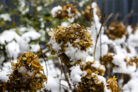
- Skip the pruning! Leave the old foliage and dried flower heads on the plant to act as a natural shield against the elements.
- Make sure your soil drains well. “Wet feet” (standing water) in the winter is a recipe for root rot.
Mulch is your best friend
Spreading a thick layer of bark mulch around the base of your plants is like giving them a warm winter coat. If the forecast is looking particularly brutal, you can even mound some compost around the main stem for extra insulation. For those of you growing hydrangeas in pots, wrap the container in burlap or bubble wrap to protect the roots. Only water them on days when the ground isn’t frozen; this prevents ice buildup and keeps the moisture levels balanced. If you’re really worried about a potted plant, you can always overwinter your hydrangea in the garage or basement.