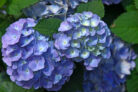
Originally from Japan, the Bigleaf Hydrangea (also known as the Mophead or French Hydrangea) has become a total staple in American gardens. But let’s be real: these decorative beauties don’t always love a harsh winter. Don’t worry, though! With a few simple tricks, you can help your hydrangeas survive the cold and keep those stunning blooms coming back year after year.
Are Bigleaf Hydrangeas winter hardy?
Bigleaf Hydrangeas are generally considered moderately hardy. This means they can handle a light frost down to about 23°F (-5°C), but ideally only for a short period. Without the right winter protection, you might find that your hydrangea fails to bloom the following summer. Your main goal is to protect the root ball from freezing solid; as long as the roots stay safe, the plant can push out new growth in the spring.
How do I winterize hydrangeas in garden beds?
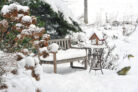
If you live in a milder climate and have your hydrangea planted in a good spot (somewhere sheltered from those biting winter winds), overwintering them in the ground is usually a breeze. To protect the root ball, apply a thick layer of bark mulch, straw, or fallen leaves topped with evergreen boughs. Just make sure the plant can still breathe and that your mulch layer won’t blow away in a storm.
How do I overwinter potted hydrangeas?
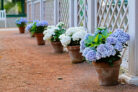
Planting in containers makes winter care so much easier! You can simply move the pot into a frost-free spot, like a cool sunroom or a greenhouse (just make sure it has some shade so it doesn’t overheat).
Since a full-grown Bigleaf Hydrangea can reach up to six feet tall, they take up a lot of space. You might be tempted to give it a major pruning to save room, but be careful! If you cut it back too aggressively, you’ll accidentally snip off next year’s flower buds.
The Quick Essentials:
- Only moderately winter hardy.
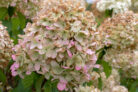
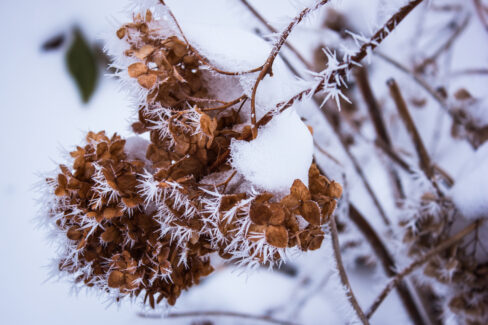
- Leave faded flower heads on the plant; they act as natural winter protection for the new buds.
- Protect the root balls of garden plants from deep freezes.
- Potted plants do best in a frost-free indoor area.
Pro Tip: If you have to leave your pot outside, try wrapping the container in an old heavy blanket or burlap to insulate the roots.