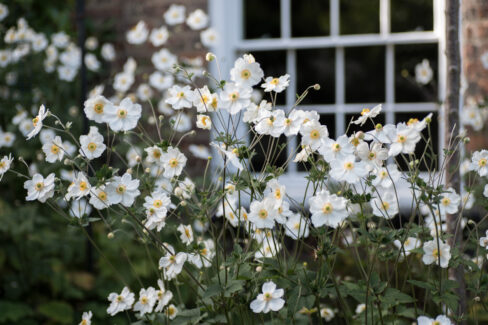
The late-blooming Japanese Anemone is a hardy perennial that brings a touch of elegance to American gardens well into September with its delicate growth and airy blossoms. If you’ve fallen in love with these beauties, you’ll be happy to know that dividing them is the best way to keep them healthy and spread the love around your yard.
Why should you divide your Japanese Anemones?
The most common reason to divide an anemone is simply to get more plants for free! But it’s not just about propagation; dividing is actually a vital part of plant maintenance and rejuvenation. Here are a few signs your anemone is ready for a split:
- The plant is getting too tall and leggy (overgrowth often leads to floppy stems).
- It’s becoming “bloom-lazy” (putting all its energy into leaves instead of flowers).
- It’s taking over the garden bed (they can be quite the space hogs!).
- It needs a youth boost (to encourage fresh buds and shoots).
- You’re planning to move it (dividing during a transplant helps the plant establish more stable growth).
When is the best time to divide?
Timing is everything! You should aim to divide your perennials in early spring (February to March) before the new growth really kicks in. Alternatively, you can do it in late summer or very early fall (around mid-August). The golden rule is to only divide the plant when it isn’t busy blooming.
Avoid dividing in late autumn. If you wait until November, the freshly cut sections will be extremely sensitive to frost. Unlike established anemones, these new divisions will need a heavy blanket of mulch or evergreen boughs to survive the winter chill.
How to divide like a pro
Before you start digging, you’ll want to cut your plants back to about 4 inches above the ground. This makes the plant much easier to handle and prevents unnecessary damage. Just grab a sharp pair of garden shears, gather the old stems, and give them a clean chop.
Next, use a spade to carefully lift the root ball out of the ground and shake off any large clumps of dirt. Now comes the surgery: use a sharp knife, a spade, or even a garden saw to split the root stock. Aim for sections about 4 inches wide, making sure each piece has at least two growth buds.
Pro Tip: Always disinfect your tools before you start. It’s the best way to keep your plants healthy and prevent the spread of garden diseases!