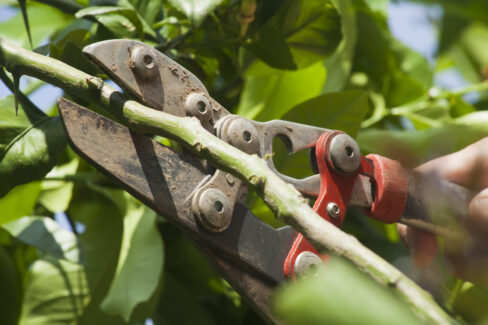
Since lemon trees (*Citrus x limon*) have a tendency to get a bit leggy and sparse, regular pruning is a must. Whether you want to train yours into a tall “standard” tree, focus on a perfectly shaped canopy, or just let it grow into a lush bush, the choice is totally up to you!
Why and When Should You Prune?
Left to their own devices, lemon trees have a pretty “scraggly” growth habit. Instead of forming a neat, rounded crown, they tend to shoot out side branches in every direction. This wastes a lot of the tree’s energy on extra foliage rather than what we really want: beautiful blossoms and juicy fruit.
The best time to give your lemon tree a haircut is in the early spring. However, if you’re tight on space in its winter quarters, you can also prune it in the fall. Of course, if you spot diseases or pests, you can (and should) trim away the affected areas immediately, regardless of the season.
How to Prune
When it comes to lemon trees, we generally talk about two different types of pruning:
- Structural Pruning (Training): Building the shape of the canopy.
- Maintenance Pruning: Thinning things out, removing damage, and preventing the tree from getting “old” and unproductive.
For older, neglected trees, a rejuvenation prune might be necessary. You can also use specific techniques to train your tree into a “standard” (a single tall trunk with a bushy top).
Structural Pruning: Building the Canopy
The secret to a great canopy is starting with two or three strong “lead” branches. These will act as the skeleton for your tree’s crown.
Year 1: After Bringing Your Tree Home
- Lead branches: Shorten these by no more than a quarter of their length.
- Side shoots: Trim these so they are about 4 to 6 inches shorter than the main lead branch they are growing from.
- Lower growth: Snip off any shoots growing below the height where you want your canopy to start.
Year 2: Developing the Shape
Over the last year, those main lead branches should have branched out—ideally producing three or four new shoots. Pick the two strongest ones to become part of the permanent framework. To encourage them to branch out even more, trim them back by a quarter.
Again, trim the side shoots on these framework branches so they stay about 4 to 6 inches shorter than the main branch.
Subsequent Years
Keep following the Year 2 pattern:
- Choose two shoots from the new growth and trim them by a quarter.
- Keep side shoots shorter than their main lead branches.
Once your lemon tree has reached its “dream shape,” you can switch to light maintenance:
- Trim back any branches that are growing out of bounds.
- Snip off harvested branches just below where the fruit was attached.
Pro Tip: Don’t overdo it once the shape is established! Lemon trees set their flower buds the previous year, so heavy pruning will mean fewer lemons next season.
Maintenance Pruning
Maintenance pruning keeps your tree looking sharp and ensures it stays productive. You should give your tree a good “check-up” at least once a year, but only cut when necessary:
Dead or Broken Branches
If a branch has snapped at the base, cut it off flush with the larger parent branch.
For dead wood, make sure to cut back until you hit healthy, green wood. Trees can only “heal” (seal the wound) in living tissue. If you leave a dead stub, it stays open and becomes a highway for pests and diseases.
Not sure if a branch is dead? Use the “scratch test.” Scrape a tiny bit of bark away with your fingernail:
- Green underneath? It’s alive!
- Brown and brittle? It’s toast—go ahead and clip it.
Thinning Out the Interior
- Remove any shoots growing inward toward the center of the tree.
- If two branches are crossing, keep the stronger one and remove the other.
- If two branches are growing very close together, remove the weaker one at the base (the branch collar).
Rejuvenation Pruning: The “Fresh Start”
If your potted lemon tree hasn’t been touched in years, it might need some tough love. Signs your tree needs a reset include sparse leaves, very few flowers, and almost no fruit.
Here’s how to do it:
- Remove all dead wood.
- Cut healthy, strong framework branches back by a half or even two-thirds. (Just make sure there is at least one “sleeping eye” or bud node left on the branch!)
- Cut all other weak or spindly branches right back to the base.
After a radical prune like this, it’s a great idea to repot your tree to give it a boost. Keep in mind that this is a “hard prune”—you likely won’t see any lemons for the next two years, but you’ll have a much healthier tree in the long run.
Training a “Standard” (Tree Shape)
Turning a young, bushy plant into a classic tree shape takes a little patience.
1. Pick a Trunk: Choose the strongest, most central shoot. Tie it to a stake so it grows perfectly vertical.
2. Trim the Sides: Cut all other side branches back by about half.
3. Wait: Let the tree grow for a year or two. Just do basic maintenance during this time.
4. Shape the Top: Once it’s tall enough, remove all branches below the “crown” area. Shorten the new crown branches by half to encourage them to bush out.
5. Follow-up: Keep removing any new shoots that pop up on the trunk and keep the canopy thinned out.