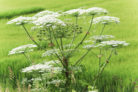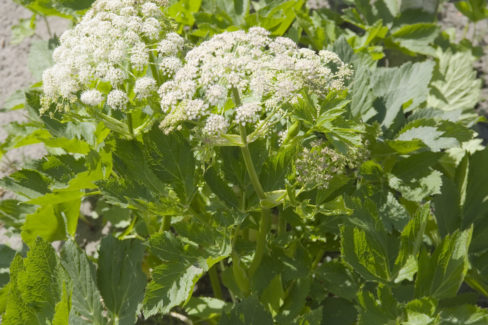
Masterwort (scientifically known as *Peucedanum ostruthium*) is a fascinating member of the carrot family that hails from the rugged peaks of the Alps. It’s been a staple in herbal medicine for centuries, but here’s a quick heads-up: if you aren’t an expert at plant ID, don’t go foraging for this one just yet. Masterwort has some seriously deadly look-alikes that you definitely don’t want in your basket!
Fun Facts About Masterwort
This hardy perennial grows about 3 feet tall and loves the high altitudes of the Alps, usually found between 3,000 and 9,000 feet. From June to August, it puts on a show with massive, white-to-pinkish flower clusters (umbels) that can have up to 50 tiny rays. If you get close, you’ll notice a strong, spicy scent that smells a bit like a mix of celery and carrots.
Masterwort has a long history as a “master” healer. Even the famous herbalist Hildegard von Bingen used its roots as medicine back in the day. In the past, people even believed the plant had magical protective powers!
The Healing Benefits
Masterwort is packed with essential oils and tannins. When prepared as a tea, a poultice, or a tincture, it’s traditionally used to help with a variety of issues, including:
- Abscesses and skin ulcers
- High blood pressure
- Bloating and gas
- Common colds
- Liver and gallbladder issues
- Menopause symptoms
- Toothaches
The Danger of Look-Alikes
Because Masterwort belongs to the *Apiaceae* (umbellifer) family, it shares a very similar look with some of the most toxic plants in the world. You should only harvest Masterwort if you are 100% certain of your identification. Here are the “evil twins” you need to watch out for:
- Poison Hemlock
- Water Hemlock
- Fool’s Parsley
Poison Hemlock
This plant has a dark history—the ancient Greeks and Romans used a brew made from its flowers or roots for executions. In fact, this is the very plant that killed the philosopher Socrates. It’s a biennial that can grow up to 6 feet tall. You can spot it by its white flower clusters (blooming June to September), but the real giveaway is the smell: it has an intense, unpleasant odor often described as “mousy.”
Water Hemlock
Also known as “cowbane,” this is another one to stay far away from. It grows up to 5 feet tall and loves damp spots near standing water. Its white flowers form double umbels with 10 to 20 rays. Every single part of this plant—especially the root—is incredibly toxic. Even eating a tiny amount can be fatal, usually causing death by respiratory failure.
Fool’s Parsley
Often found as a weed in fields and pastures, Fool’s Parsley is a toxic annual or biennial that grows about 3 feet high. Its white flowers bloom from June to September in loose clusters. If you rub the leaves between your fingers, it gives off a distinct garlic-like smell, which is one way to tell it apart from the real deal.