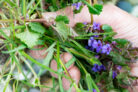
If you’re planning on foraging for chickweed to toss into a fresh salad or whip up a healthy side dish, you’ll want to make sure you’re picking the right plant. While it’s a fantastic wild edible, there are a few look-alikes out there you should know about. Here’s a quick guide on where to find the real deal and how to tell it apart from the “imposters.”
Where Does Chickweed Grow?
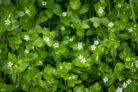
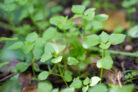
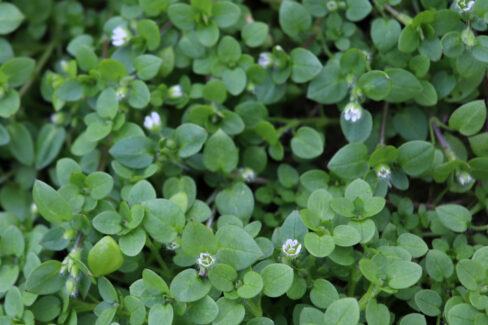
Chickweed is one of those hardy wild herbs that seems to pop up just about everywhere. You’ll find it thriving in well-tended vegetable gardens, along the edges of footpaths, and even taking over lawns like a lush green carpet. Depending on your perspective, you can either work on weeding it out or harvest it for a delicious salad.
In the garden, it’s often dismissed as a pesky weed, but in the wild, it spreads freely wherever it finds moist, nutrient-rich soil. You’ll spot it in many woodlands once you know what to look for—it’s one of those plants that, once identified, suddenly seems to be everywhere! If you want a steady supply right at home, you can also easily grow it yourself using seeds.
Key Features of Chickweed
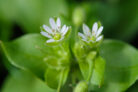
At first glance, chickweed looks pretty unassuming. However, once you’ve seen it up close, it’s easy to recognize. It’s a good idea to study a few photos so you can distinguish it from similar-looking plants.
Typical characteristics to look for:
- Height: Can grow up to 15 inches (40 cm) tall.
- Growth Habit: Spreads across the ground like a dense green mat.
- Stems: Thin and soft, featuring a single, fine line of hairs running down one side.
- Leaf Length: About 1 inch (3 cm).
- Leaf Shape: Oval with a pointed tip.
- Flowers: Tiny, white, star-shaped blossoms.
- Bloom Time: Usually between May and October.
Related Stitchwort Species
There are several relatives in the “Stitchwort” family that look similar to common chickweed. For example, Greater Stitchwort is a frequent look-alike. If you accidentally pick some, don’t worry—it’s not poisonous. However, it doesn’t taste nearly as good as true chickweed. If you take a bite and it’s not hitting the spot, you’ve likely found a relative instead of the culinary favorite.
Giant Chickweed and Scarlet Pimpernel
There are two other plants that often get confused with chickweed: Giant Chickweed (Water Chickweed) and Scarlet Pimpernel. Giant Chickweed is perfectly safe and non-toxic, so no worries there.
Scarlet Pimpernel, however, is a different story. This plant contains saponins, which are considered mildly toxic. While a tiny amount won’t cause serious harm, you definitely don’t want it in your salad bowl. It’s worth taking a close look at photos of Scarlet Pimpernel so you can spot the difference.
The easiest way to tell them apart is during their blooming season. Scarlet Pimpernel has distinct orange or reddish flowers, while true chickweed has tiny white flowers. Another pro-tip: look for that single line of fine hairs on the stem—that’s a classic chickweed trademark that the pimpernel lacks!