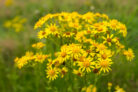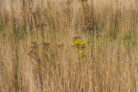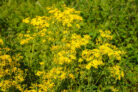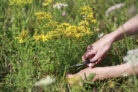
St. John’s Wort is a fantastic native wildflower that’s been a staple in natural medicine for ages. Whether you’re looking to brew a soothing tea or whip up your own homemade salves and tinctures, foraging for it is a great summer activity. But here’s the catch: while you’re out there, you might run into a toxic look-alike called Tansy Ragwort.
St. John’s Wort vs. Tansy Ragwort: The Battle of the Yellow Blooms
St. John’s Wort hits its peak potency right during its blooming season. That’s why so many herbal enthusiasts head out into the meadows in midsummer to harvest it. If you know exactly what to look for, you’ll have no trouble spotting the good stuff. However, if you’re a beginner or just glancing quickly, it’s easy to accidentally grab Tansy Ragwort, which blooms in the same bright yellow hue at the exact same time.
Check the Leaves First
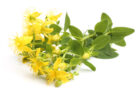
- St. John’s Wort leaves grow in opposite pairs along the stem.
- They are small, oval-shaped, and have smooth edges.
- If you hold a leaf up to the light, you’ll see tiny translucent dots (and black dots along the edges).
- Those dots are actually oil glands—nature’s little medicine cabinets!
- Tansy Ragwort leaves are much larger.
- They are deeply lobed (pinnatifid) with blunt tips.
- In its first year, Ragwort only grows as a low-to-the-ground rosette of leaves.
The Flowers Tell a Story
Both plants can reach nearly 3 feet in height and feature branched stems topped with clusters of yellow flowers. They might look identical from a distance, but a closer look reveals the truth.
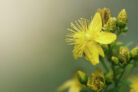
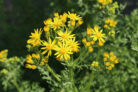
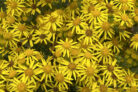
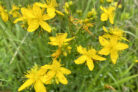
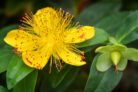
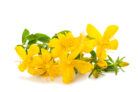
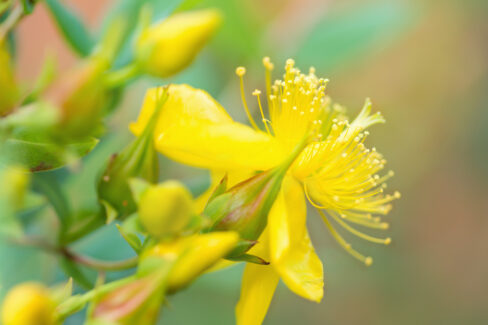
The toxic Tansy Ragwort has flowers that look like mini daisies or marigolds, with a distinct center of disc florets surrounded by narrow, petal-like ray florets. The number of petals can vary. On the flip side, the flowers of the medicinal St. John’s Wort always have exactly five petals that are broad and rounded.
Pro Tip:
Take a flower bud or petal and crush it between your fingers. If it releases a deep red juice that stains your skin, you’ve found the real deal! Since Tansy Ragwort isn’t toxic through skin contact, this “smush test” is a safe and foolproof way for beginners to double-check their find.
A Harmless Mix-up: Smooth Hawksbeard
You might also stumble across Smooth Hawksbeard in the wild. While it also sports yellow flowers, don’t worry if you mix this one up—it’s non-toxic and actually edible! It has fewer leaves than St. John’s Wort, and they tend to be larger. The flowers look more like dandelions and usually start popping up as early as May. A quick image search online will help you tell this one apart from the others.
Safe Harvesting at Home
When it comes to foraging wild herbs, the golden rule is: if you aren’t 100% sure, don’t pick it. If you’re feeling a bit nervous about identifying it in the wild, why not just grow it yourself? Planting St. John’s Wort in your own garden makes harvesting totally stress-free. Just sow the seeds in a sunny to partly shaded spot. Since it’s a hardy perennial, you’ll have your own supply of healing herbs for years to come!