You don’t need an exotic herb garden to find powerful plants; many of the best healing and culinary herbs are actually native to our own backyards! Today, I’m sharing seven of the most popular local herbs you should know, plus one “insider tip” that’s a must-have for any natural medicine cabinet.
[[pflanzen]]
++Lady’s Mantle (Alchemilla vulgaris)
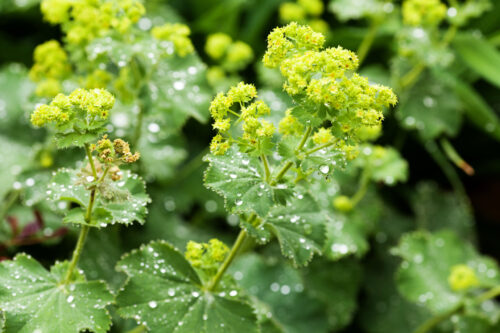
This perennial is a real beauty with its rounded, scalloped leaves and soft, fuzzy undersides. It has a magical little habit called “guttation,” where it “sweats” water droplets that collect in the center of the leaves like sparkling diamonds. Lady’s Mantle is a powerhouse in herbal medicine, famously used for women’s health issues. But it’s also great for soothing an upset stomach, coughs, colds, and even migraines. If you make it into a salve, it’s known for tightening the skin and helping to fade age spots.
++Valerian (Valeriana officinalis)
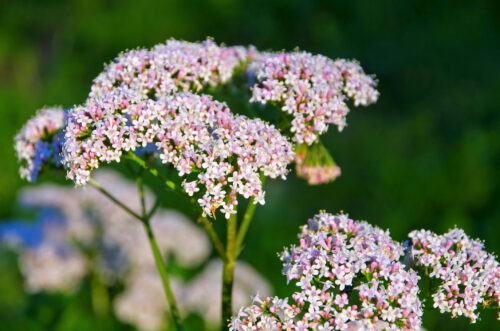
With its delicate, feathery leaves and clusters of white or pale pink flowers, Valerian is a gorgeous addition to any garden. It’s also a pollinator superstar, packed with nectar that attracts rare butterflies like the Skipper. While many know Valerian root tea as a sleep aid, its real magic is that it “brings light into the dark”—it helps calm the nerves and relax the body without making you feel totally groggy.
++Wormwood / Absinthe (Artemisia absinthium)
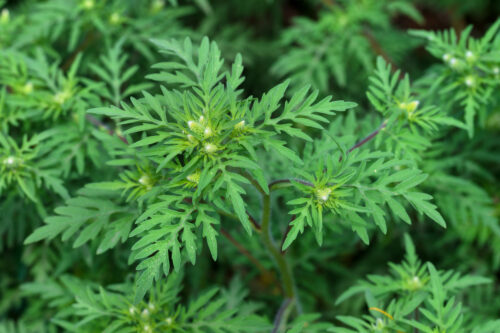
Gardeners have been growing this silvery-green perennial since the Middle Ages. You can spot Wormwood by its soft, aromatic foliage and tiny yellowish flowers that bloom from July through September. Because it’s quite bitter, it’s a classic seasoning for heavy, rich dishes to help with digestion. It’s also the star ingredient in the famous drink Absinthe! Pro tip: An extract made from this herb is a fantastic natural way to keep aphids and other pests off your plants.
++Ribwort Plantain (Plantago lanceolata)
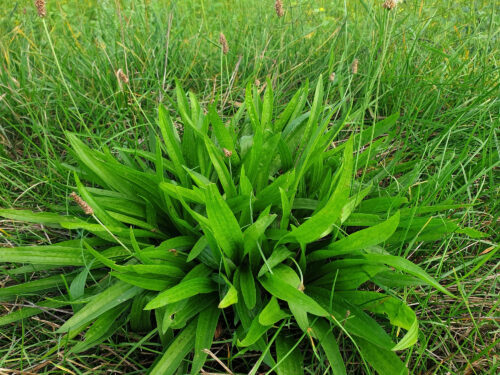
Ribwort Plantain is one of our most important native healing plants—it was even named “Medicinal Plant of the Year” back in 2014. This hardy perennial grows in a rosette with long, lance-shaped leaves featuring very distinct parallel veins. From May to September, it sends up tall stalks topped with small white flower spikes. It’s a go-to for boosting the immune system; a tea or syrup made from the leaves is incredibly soothing for coughs and sore throats.
++Yarrow (Achillea millefolium)
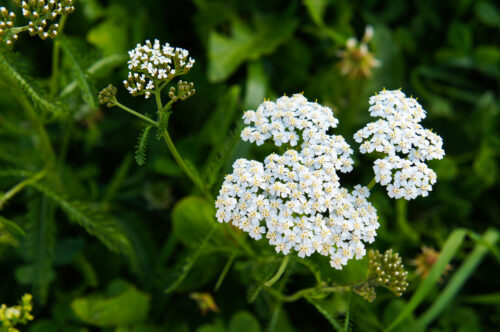
Yarrow has a lovely, delicate look thanks to its feathery leaves and flat-topped clusters of tiny white flowers. It smells sweet and is a magnet for bees and butterflies. In the kitchen, the spicy kick of young yarrow leaves is a great addition to salads or herb spreads. Medicinally, it’s another wonderful herb for women’s health. Fun fact: It was historically used on battlefields to help stop bleeding and treat wounds!
++Ground Ivy / Creeping Charlie (Glechoma hederacea)
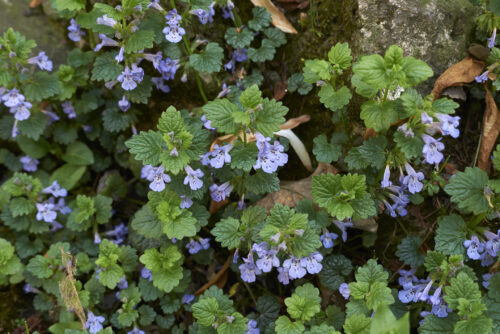
Now, some gardeners find this one a bit annoying because it loves to spread, but Ground Ivy is actually a very useful “pioneer” plant. It has cute heart-shaped leaves and purplish-blue flowers that insects adore. It’s a heavy hitter in traditional medicine for stubborn issues like slow-healing wounds or chest congestion. Plus, it has a flavor similar to parsley, making it a tasty (and free!) herb to use in your cooking.
++Wild Garlic / Ramps (Allium ursinum)
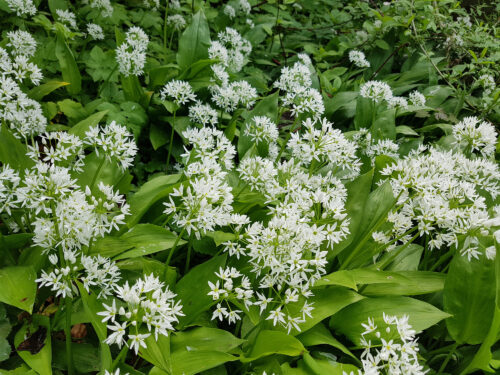
Spring wouldn’t be the same without Wild Garlic! Its leaves have a shiny top and a matte underside, and they pack a punch of garlic flavor that’s perfect for pesto or herb butter. You can find them in shady woodlands starting in mid-March. Just a heads-up: once those pretty white star-shaped flowers appear in April, the leaves lose their flavor and shouldn’t really be harvested anymore. It’s also great for helping with digestion.
%%St. John’s Wort (Hypericum perforatum)
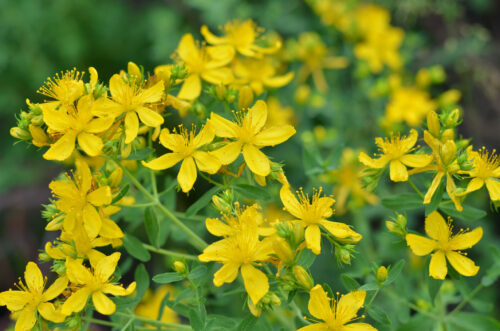
Here is my top tip: St. John’s Wort. You’ll recognize it by its bright yellow flowers (blooming June–Sept) and oval leaves that look like they have tiny holes in them—those are actually little oil glands! If you rub the leaves between your fingers, they’ll release a reddish juice. People have been using this plant since ancient times. St. John’s Wort oil is amazing for soothing burns, sunburns, and skin inflammation, and it’s also widely used to help lift the spirits during times of mild depression.