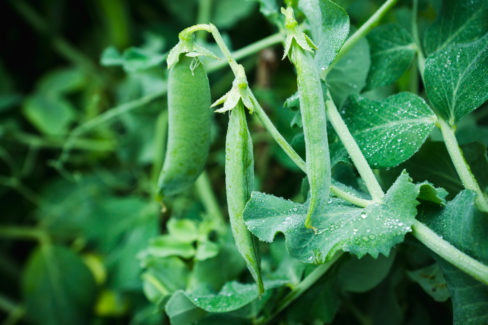
While peas are generally pretty tough and many modern varieties are bred to be disease-resistant, they aren’t totally invincible. Every now and then, you might run into issues with fungi, viruses, or those pesky aphids. Here’s what to look out for and how to handle it.
Powdery Mildew
Powdery mildew is probably the most common fungal headache in the garden. It often shows up in a very short window of time, but don’t let that fool you—it can ruin your entire harvest fast. Once the plants are infected, the peas themselves take on a nasty fungal taste and aren’t really fit for the dinner table anymore.
It’s easy to spot: look for a white, flour-like coating spreading across the leaves and pods. If it gets bad, the pods will discolor and the whole plant will start looking stunted and deformed.
The good news? You can fight back with a simple DIY remedy. Mix one part milk with one part water and give your plants a good spray. Raw milk works best, but if you only have pasteurized, just let it sit out in a warm spot for a few hours to get those lactic acid cultures moving. You can even use this as a preventative spray if the forecast calls for warm, muggy weather. Another pro tip: get an early start on sowing your seeds. By planting early, you’ll harvest before the fall dampness sets in, which is when mildew loves to strike.
Pea Moth
The tricky thing about the pea moth is that you usually don’t know there’s a problem until it’s too late, because the larvae are busy snacking on the peas inside the pods. A simple fix is to use fine-mesh garden netting to keep the moths away in the first place. Encouraging natural predators like parasitic wasps or predatory mites also helps keep the population down. Also, keep in mind that these pests often hitch a ride on dried peas, so always double-check your peas before drying them for storage.
Pea Aphids
Pea aphids love to hang out in the tightly curled new leaves and growing tips of the plant. This stunts the plant’s growth and definitely cuts into your harvest. Because they hide deep inside those closed-up tips, it can be tough to reach them with organic sprays or teas. Often, the easiest move is to just pinch off the infested tips; this encourages the plant to branch out from the sides instead. This is another area where “good bugs” come in handy—beneficial insects can crawl right into those tight spots and feast on the aphids where sprays can’t reach.