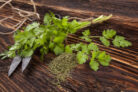
Cilantro is a total staple in Asian cuisine, and honestly, it’s hard to imagine a good curry or taco without it! It’s definitely becoming a favorite in gardens over here, too, though it’s famously a “love it or hate it” herb. While some of us can’t get enough of that fresh zing, others think it tastes straight-up like soap.
This Variety is a Perennial
If you’re wondering whether cilantro will come back year after year, it really depends on which variety you’re growing. Common cilantro (the stuff you usually see at the grocery store) is an annual, meaning it finishes its life cycle in one season. However, Vietnamese cilantro is a perennial! It does have slightly different needs than the standard variety, though. For example, it needs a different growing spot—Vietnamese cilantro actually thrives in damp, shady areas.
Characteristics of Vietnamese Cilantro
Interestingly, Vietnamese cilantro (Persicaria odorata) is part of the knotweed family, so it’s not actually a close relative of common cilantro (Coriandrum sativum). Its roots are in Vietnam and Malaysia, where it’s a massive part of the local diet. It’s usually served fresh and piled high on all sorts of dishes.
How Winter-Hardy is Vietnamese Cilantro?
Vietnamese cilantro is pretty tough and can handle a mild winter without much fuss. If you’re expecting a long cold snap, you’ll want to give it a little help by mulching with some straw or brushwood. If you’re growing yours in a pot, you can just bring it inside to a cool room. The best part? If you bring it indoors, you can keep harvesting fresh leaves all winter long! It’s also super easy to propagate. Here are two simple ways to do it:
Propagation via Cuttings
If you want to expand your herb garden, cuttings are the way to go. It’s best to do this in the summer when the plant is at its strongest. Just snip off a few 2-inch stem tips. Stick the stems into the soil deep enough to cover one or two “nodes” (the little bumps where leaves grow). Keep the soil warm and wet, and you’ll see new roots forming in just a few days.
Propagation via Layering
You can also propagate by “layering.” Just take a low-growing branch, pin it down so it touches the soil, and weigh it down with a little dirt or a small stick. After a few days, that branch will start growing its own roots. Once it’s established, you can just snip it away from the mother plant, and voila—you’ve got a brand new plant!