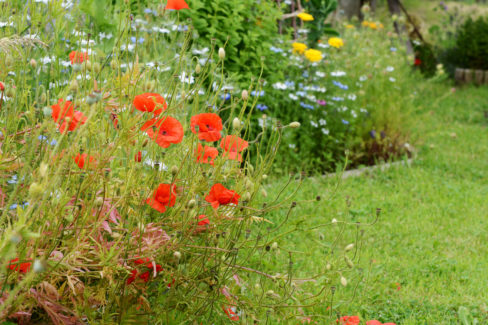
Is there anything more iconic than a field of bright red corn poppies swaying in the breeze? It’s a total summer vibe, and the good news is that you can easily bring that same magic to your own backyard. These beauties are surprisingly low-maintenance and super easy to grow if you know a few simple tricks.
Here’s everything you need to know to get your poppy garden started.
Getting Your Hands on Some Poppies
When it comes to adding corn poppies to your garden, you’ve basically got two options:
- Starting from seed
- Buying a young starter plant
Starting from Seed
If you want to go the DIY route, you can buy seed packets at your local garden center or even go on a little nature hunt. If you spot wild poppies in a field, wait until July or August when the petals have fallen off and the seed pods are dry and brown. Just snip the pods off and carefully shake the seeds out once you get home.
Buying Starter Plants
If you’re buying plants from a nursery, you’ll usually only find young ones. This is because poppies develop a long taproot very quickly. Once they’re established, they really hate being moved, so it’s best to get them in the ground while they’re still “babies.”
Pro Tip: You don’t need to buy a whole flat of flowers to get a lush look. Poppies are prolific self-seeders. Plant just one or two this year, and they’ll drop enough seeds to give you a whole cluster of flowers next season!
When to Plant
The sweet spot for planting corn poppies is in the spring, ideally between March and April.
Finding the Perfect Spot
Poppies are total sun-worshippers. You’ll want to pick a bright, sunny spot that doesn’t get *too* sweltering hot. If you try to grow them in the shade, you’ll likely end up with a lot of green leaves but zero flowers.
Pro Tip: Because they can get a bit tall, corn poppies look amazing as a backdrop in a perennial bed.
Soil Preferences
The absolute “must” for poppies is well-draining soil—they cannot stand having “wet feet” (standing water). They also need deep soil so that long taproot can really dig in. If your soil is a bit heavy or clay-like, just mix in some sand to loosen it up.
Here’s the quick checklist for perfect poppy soil:
- Deep and loose
- Well-draining
- Neutral pH
- Sandy or rocky texture
- Dry to moderately moist
- Low to moderate nutrient levels (they actually prefer soil that isn’t too rich!)
Pro Tip: Since poppies have that sensitive taproot I mentioned, it’s always best to sow your seeds or set your plants exactly where you want them to stay. They aren’t big fans of being transplanted later on!