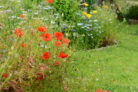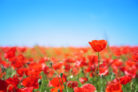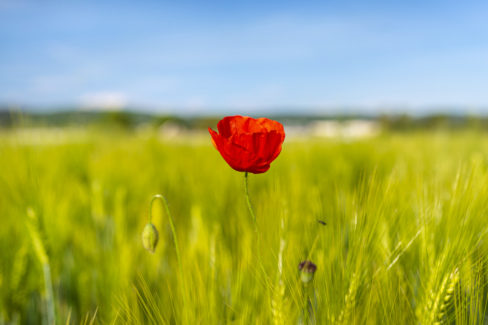
When you think of summer, what’s the first image that pops into your head? For a lot of us, it’s a golden wheat field dotted with bright red poppies. There’s really no other flower that captures the essence of the sunny season quite like the Common Poppy. But there is so much more to this plant than just its good looks! Want to get to know this summer favorite a little better? You’ve come to the right place.
General Overview
Botanical Classification & Common Names
- Latin Name: *Papaver rhoeas*
- Family: Papaveraceae (Poppy family)
- Order: Ranunculales (Buttercup-like plants)
- Type: Wildflower
- Nicknames: Corn poppy, Field poppy, Flanders poppy, Red poppy
Where It Grows
- Origin: Europe
- Distribution: All across Europe and North Africa
- Common spots: Roadsides and open fields
- Propagation: Self-seeding via pollen
Pro Tip: Back in the day, you’d see poppies everywhere on farmland. Because of modern pesticides, they’re disappearing from commercial fields. Nowadays, you’re more likely to spot them in meadows, vacant lots, or rocky wasteland areas.
Uses
- Herbal Remedy: Historically used for insomnia, hoarseness, and restlessness
- Garden Beauty: A classic ornamental plant
- Decor: Beautiful (though fleeting) cut flowers
- Baking: Seeds can be used in the kitchen
Pro Tip: If you’re planning on eating poppy seeds or using the plant medicinally, keep the quantities very small.
Other Characteristics
- Toxic: Contains mild toxins
- Drought-tolerant: Handles dry spells like a champ
- Life Cycle: Usually a biennial (lives for two years)
Pro Tip: In addition to tannins and alkaloids, the poppy contains a milky sap that can be a bit irritating to the skin, so handle with care!
Appearance
Growth Habit
- Form: Herbaceous (soft-stemmed)
- Height: Anywhere from 1 to 3 feet tall
Leaves
- Shape: Pinnate (feathery/lobed)
- Length: About 6 to 8 inches
- Texture: Hairy and serrated (toothed edges)
The Bloom
- Bloom Start: May (depending on the weather)
- Bloom End: July
- Diameter: About 5 inches across
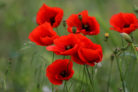
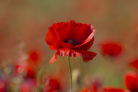
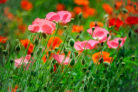
- Color: Brilliant red (though you can find cultivated varieties in white or soft pink)
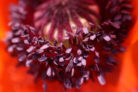
- Petals: Four delicate, papery petals
- Stamens: Up to 160 per flower
- Post-bloom: Once the petals fall, they leave behind a seed pod (capsule) packed with tiny seeds.
Root System
- Features a long taproot that reaches deep into the soil.
Growing Poppies in Your Garden
- When to Plant: March to April
- Harvesting Seeds: July to August
- Germination Time: 2 to 3 weeks
- Sun Requirements: Full sun
- Soil Preferences: Dry, well-draining, deep, sandy, and alkaline (limy)
- Maintenance: Only water on super hot days; no fertilizer needed!
Pro Tip: If you skip the pruning and leave the seed pods on the stem after the flowers fade, the poppy will self-seed for next year. That’s why you usually see them growing in big, beautiful clusters in the wild.
Common Pests & Problems
- Susceptibility: Aphids love them.
Pro Tip: Try planting poppies near aromatic herbs like sage. Not only do they look great together, but the scent of the sage helps keep those pesky aphids away!