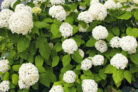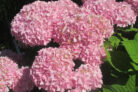
Some gardeners love the challenge of growing plants from scratch using seeds. But when it comes to Bigleaf Hydrangeas (the classic Mopheads and Lacecaps), starting from seed is a total headache and rarely works out. The good news? There are much easier ways to get more of these beauties in your garden!
How can I propagate my Bigleaf Hydrangeas?
For the best results, you’ll want to use vegetative propagation. This is just a fancy way of saying you’re growing a new plant from a piece of an existing one. This ensures your new hydrangea is a genetic twin of the parent plant. You can divide them, take cuttings, or use the layering method. All three are pretty straightforward and usually have a great success rate.
The easiest way: Growing from cuttings
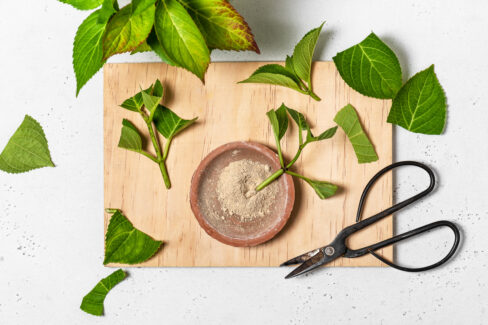
Taking cuttings is by far the simplest way to multiply your hydrangeas. In mid-summer (July is usually the sweet spot), look for young shoots that don’t have flower buds. Snip these off and cut them into sections about four to six inches long.
Make sure each section has a pair of leaves at both ends. Strip off the bottom leaves, dip the end into some rooting hormone, and tuck it into a pot with some seed-starting mix. Keep your cuttings in a bright spot with high humidity and make sure the soil stays consistently moist. You should see roots starting to form within just a few weeks!
Propagation by division
If you’re already planning on transplanting your hydrangea, dividing it is a breeze. Late spring is the perfect time for this, once the ground has warmed up. After you’ve dug up the plant, use a sharp spade to slice off a section of the root ball. Then, just move that new section to its own perfect spot in the garden.
Propagation by layering
Layering is a “slow and steady” method where the new plant develops roots while still attached to the “mom” plant. Take a flexible, young branch and bend it down to the ground. Pin it into the soil so that the tip of the branch points back up toward the sky. You can even tie the tip to a small stake to keep it growing straight. Just be patient—it takes several months for these “layers” to grow enough roots to survive on their own.
Quick Summary:
- Growing from seed is rarely successful.
- The easiest method: Taking stem cuttings.
- Best for transplanting: Dividing the root ball.
- Layering: Wait for strong roots before detaching from the parent plant.
Pro Tip: Plant your new layered hydrangeas in their permanent home after about a year to make sure they are strong enough.