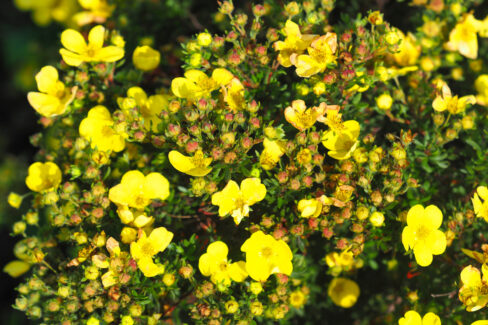
The non-toxic Potentilla (also known as Shrubby Cinquefoil) is a total breeze to care for and treats you to a sea of blooms for weeks on end. If you mix and match different colors, you can create a really stunning look in your landscape. Plus, since they’re so easy to propagate, you can fill up your garden with these beauties without breaking the bank!
Ways to Propagate Your Potentilla
There are a few different ways you can grow new Potentilla shrubs:
- Division
- Seeds
- Cuttings
Division
This is definitely the easiest way to get new plants fast. Just make sure your shrub is a few years old and has reached a decent size before you try this. Here’s how you do it:
- Carefully lift the shrub out of the ground using a garden fork.
- Shake off any loose soil.
- Check the root ball for any damage or rot.
- Snip away any dead or diseased roots.
- Use a sharp spade to split the root ball into two or more sections.
- Replant your new sections in their new spots.
- Give them a good, deep watering.
Growing from Seed
This method takes a little more patience. You can buy seeds at your local garden center or harvest the tiny, hairy nutlets from an existing shrub in the fall. You can sow them directly into your garden bed or start them in pots. If you’re starting indoors, fill some pots with seed-starting mix, tuck the seeds in, cover them with a bit of soil, and keep them moist. Place the pots in a bright, warm spot. To speed things up, you can cover the pots with clear plastic wrap to create a mini greenhouse effect—just remember to vent it regularly so things don’t get moldy!
Propagation via Cuttings
You can take cuttings in the summer (to grow outdoors) or late fall (to start in pots indoors). Aim for a length of about 4 to 8 inches. When you cut the stem, make a diagonal snip just below a flower bud. Strip off the lower leaves so they don’t rot in the soil. Next, fill a tray with seed-starting mix or coconut coir and bury the cuttings about halfway deep. Keep the soil moist, but be careful not to overwater—you don’t want them sitting in soggy soil.
To help them root faster, you can cover the pot with a plastic bag (again, remember to air it out!) to create that greenhouse vibe. Keep the tray in a warm, bright spot—if it’s nice out, they can even stay outdoors. As soon as you see new growth popping up, your new little shrub is ready to be moved to its permanent home in the garden.