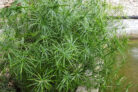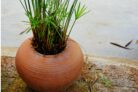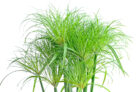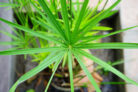
You don’t need a magic green thumb to propagate Umbrella Papyrus (Cyperus). Honestly, these plants are so eager to grow that they practically give you three or four different ways to start new babies. Some methods are easier than others, but as long as you have a little roadmap, you’re golden. Here’s how to do it.
Propagation Methods at a Glance
- Offsets
- Cuttings
- Seeds
- Division
Offsets
Only certain varieties—usually the larger ones—will produce offsets. You’ll spot these little plantlets growing right at the tip of the stalks, sitting just above the umbrella-like leaf whorl.
- Wait until they are about 4 inches (10 cm) long.
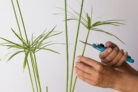
- Snip them off cleanly with a sharp knife.
- Trim the leaves back by about half.
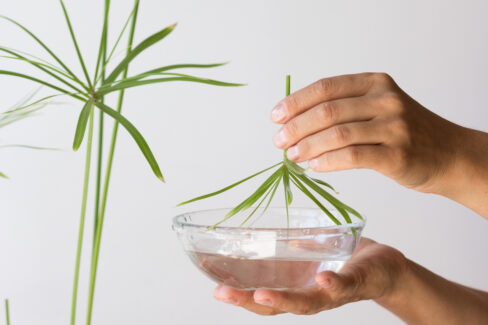
- Place them upside down in a glass of water to root (this can take up to 4 weeks).
- Change the water regularly to keep it fresh.
- Once you see healthy roots, go ahead and pot them up.
Cuttings
Early summer is the perfect time to try this. Just snip a stalk about 6 to 8 inches below the leaves, and you’ve got yourself a cutting. If you keep your plants outdoors, the wind might even snap a few stalks for you—don’t throw those away! They make perfect cuttings. From there, just follow the same “upside down in water” steps mentioned for offsets.
Pro Tip:
Plant several rooted cuttings in the same pot, spaced slightly apart. This is the fastest way to get that lush, bushy look we all love.
Seeds
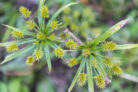
Umbrella Papyrus seeds are tiny, but you can find them at most good garden centers or online. You can start them indoors any time of year. If you’re lucky enough to harvest seeds from your own flowering plant, sow them immediately for the best results.
- Fill small pots with a seed-starting mix.
- Scatter the seeds on the surface.
- Press them down gently, but don’t cover them with soil—they need light to germinate.
- Keep them in a bright, warm spot (70°F to 75°F is the sweet spot).
- Keep the soil consistently moist.
- You can cover the pots with clear plastic wrap to hold in humidity, just remember to vent it daily.
- Once the seedlings hit about 4 inches tall, move them to their own pots.
- These also work great for hydroponics or even aquariums.
Division
When it’s time for repotting in the spring, dividing a large plant is a great move. In fact, if you want to keep using the same size pot, dividing the root ball is pretty much a necessity.
- Remove the plant from its pot.
- Carefully pull the root ball apart.
- Split it into two or more sections.
- Repot each section into its own container with fresh soil.