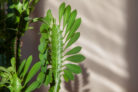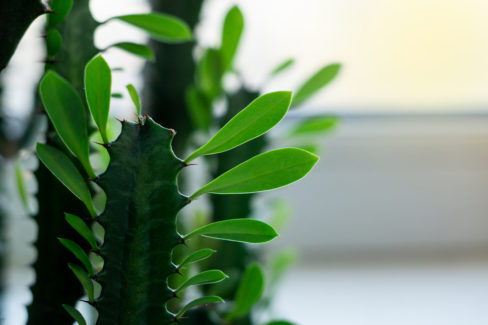
The African Milk Tree (*Euphorbia trigona*) looks so much like a cactus that it’s often called the “Western Cactus.” But don’t let the looks fool you—this succulent has its own set of rules. When it comes time to prune, you’re not just managing the plant’s shape; you also have to be super careful with its toxic milky sap.
Why You Might Need to Prune
The African Milk Tree is a low-maintenance dream and doesn’t usually need much fuss. While regular pruning isn’t strictly necessary for the plant’s health, there are a few reasons you might want to grab your shears:
- To keep its height in check
- To encourage a fuller, bushier look
Managing Height
One thing you’ll notice about the African Milk Tree is that it grows fast—really fast. Even in a smaller pot, this plant isn’t shy about reaching for the ceiling, often hitting heights of up to six feet. If your succulent is starting to take over the room, a quick trim can help keep it at a manageable size.
Encouraging New Growth
Naturally, the stems of the *Euphorbia trigona* tend to grow straight up. If you want to trigger new side branches and get that dense, branched-out look, a light pruning is the way to go. Cutting the tips encourages the plant to sprout new side shoots, giving it a wider, more dramatic silhouette.
Keep in Mind: Pruning Leaves Scars
Before you start cutting, remember that every snip leaves a scar. These marks can stay visible for several months, and if you go overboard, the plant can end up looking a bit “beat up.” To keep your succulent looking its best, try to stick to a few strategic cuts rather than a major overhaul.
Safety First: Watch Out for Toxic Sap
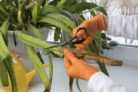
Whenever you cut this plant, it releases a milky white sap that is actually toxic. You definitely want to avoid getting this on your skin, as it can cause nasty rashes or irritation. A pro tip to stop the “bleeding” is to press a cloth soaked in hot water against the cut. Just make sure to toss that cloth in the trash afterward so nobody accidentally touches the dried sap later!
Propagating Your Cuttings
The best part about pruning? Free plants! The pieces you cut off make excellent cuttings for propagation. Aim for cuttings that are about 8 inches long, ideally from the top sections of the plant. Before you pop them into a pot with fresh soil, let them air dry for a few days so the ends can callus over. This is the secret to preventing rot and mold!