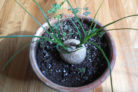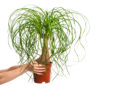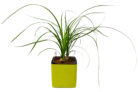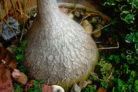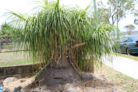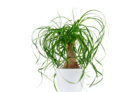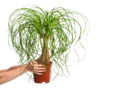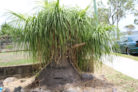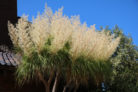
The Ponytail Palm (Beaucarnea recurvata) is a slow grower, but eventually, it’s going to take up some serious real estate in your living room. When it starts hitting the ceiling or getting too wide for its corner, you might find yourself reaching for the pruning shears.
But before you start snipping, there are a few things you should know to keep your “elephant’s foot” happy and healthy.
Trimming the Leaves
There are usually two reasons why people want to trim the foliage:
- The leaves are hitting obstacles (getting too wide)
- The leaves are turning colors
When Leaves Hit a Wall
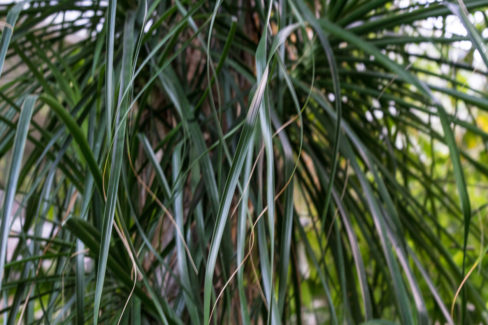
A common reason for brown tips on a Ponytail Palm is simply a lack of space. If those long, flowing leaves are constantly brushing against walls, furniture, or dragging on the floor, the friction causes brown tips. While this doesn’t actually hurt the plant’s health, most of us plant parents find it a bit of an eyesore.
Discolored Leaves
If you’re seeing dry, yellow, or brown leaves, it’s usually a sign of a watering or fertilizing issue. In these cases, the discoloration often takes over the entire leaf rather than just the tip.
To Snip or Not to Snip?
It’s tempting to grab the scissors to make the plant look “perfect” again, but be careful! Trimming the leaves can actually be counterproductive. Often, cutting into the leaf causes it to brown even further back, creating a frustrating cycle of trimming, browning, and more trimming. That said, some gardeners swear they’ve never had an issue with it.
If you want to try your luck, here’s how to “trick” the plant:
- Never cut into the healthy green part of the leaf.
- Leave a tiny sliver of the brown edge behind.
Alternatively, you can remove a whole leaf by cutting it close to the trunk. Just don’t go overboard—your Ponytail Palm needs those green leaves to photosynthesize and thrive!
Pruning the Trunk
Surprisingly, while the leaves can be finicky about pruning, the trunk is actually quite resilient. If your plant has officially outgrown its space, you can “top” it. The best time to do this is in the spring, right before or just as the growing season kicks off.
You can cut the trunk at whatever height fits your space, but try to leave at least 8 to 12 inches of trunk above the soil. A cool quirk of the Ponytail Palm? It will actually sprout new side branches just below where you made the cut!
Trimming Side Shoots
If a side branch gets too unruly, you can prune that back too. If you need to remove several branches, it’s best to do it in stages to give the plant some recovery time in between.
Tools and Technique
Whether you’re using a knife, shears, or a small saw, your tools need to be:
- Razor-sharp
- Clean
- Disinfected (rubbing alcohol works great!)
Using clean, sterile tools prevents the spread of diseases that can linger on blades for weeks. A sharp blade ensures a:
- Smooth
- Clean
- Horizontal
cut. If you accidentally crush the stem while cutting, make a fresh, clean cut just below the damaged area.
Post-Pruning Care
- Seal the “wound” by dusting it with pure charcoal powder to prevent infection.
- Dial back the watering. Without its full canopy of leaves, the plant won’t “drink” as much as it used to!