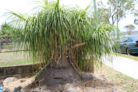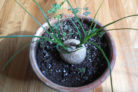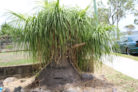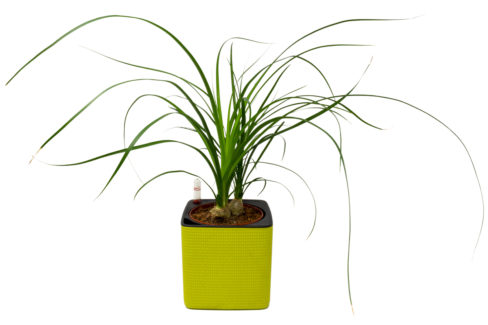
Looking at your Ponytail Palm, you might not realize that back in its native Mexico, this plant actually grows as a succulent tree! Because of those roots, the ones we keep in our living rooms are experts at storing their own water supply. Even so, knowing how to water them correctly is the secret to a happy, thriving plant.
How to Water Your Ponytail Palm the Right Way
The golden rule for the Ponytail Palm (botanically known as *Beaucarnea recurvata*) is that it handles drought much better than soggy soil, thanks to that built-in water reservoir in its trunk. To get the watering just right, keep these two things in mind:
- Avoid standing water at all costs
- Always use the “thumb test” before grabbing the watering can
Avoid Standing Water
Standing water is public enemy number one for a Ponytail Palm. This usually happens when the plant is overwatered. The first red flags are usually brown leaves. If the soil stays swampy, the roots will start to rot, which can unfortunately be fatal for your leafy friend.
To keep things safe, make sure you:
- Only use pots that have at least one drainage hole
- Add a drainage layer (like pebbles or clay shards) at the bottom of the pot
- Empty any excess water from the saucer about 30 minutes after watering
- Only water when the plant actually asks for it
The Thumb Test
The easiest way to figure out if it’s time for a drink is the “thumb test.” This method is foolproof because it accounts for everything, regardless of:
- The current season
- The size of your plant
- Your home’s temperature
Just press your thumb or finger into the top of the soil. If it feels:
- Bone dry: Go ahead and water
- Still damp: Put the watering can away for a few more days
How Much Water Does a Ponytail Palm Need?
The amount of water you use depends on how big your plant is. As long as your palm isn’t bone-dry and stressed, a good rule of thumb is to stop watering the moment you see a little bit trickling into the saucer. This saves you the hassle of having to empty a heavy saucer later—which we all know is a pain with larger plants!
Watering Ponytail Palms in Hydroponics
If you’re growing yours in a hydro-culture setup, you want to make sure the roots and the base of the trunk aren’t sitting in water. Keep a close eye on your water level indicator. Only add water when the needle is at its lowest point. Once the indicator starts to move or hits the “Optimum” mark, your plant has had plenty.
Watering During Winter Dormancy
If you move your Ponytail Palm to a cooler spot for the winter, you should cut back on watering significantly—or even stop almost entirely—until the spring growing season kicks back in.