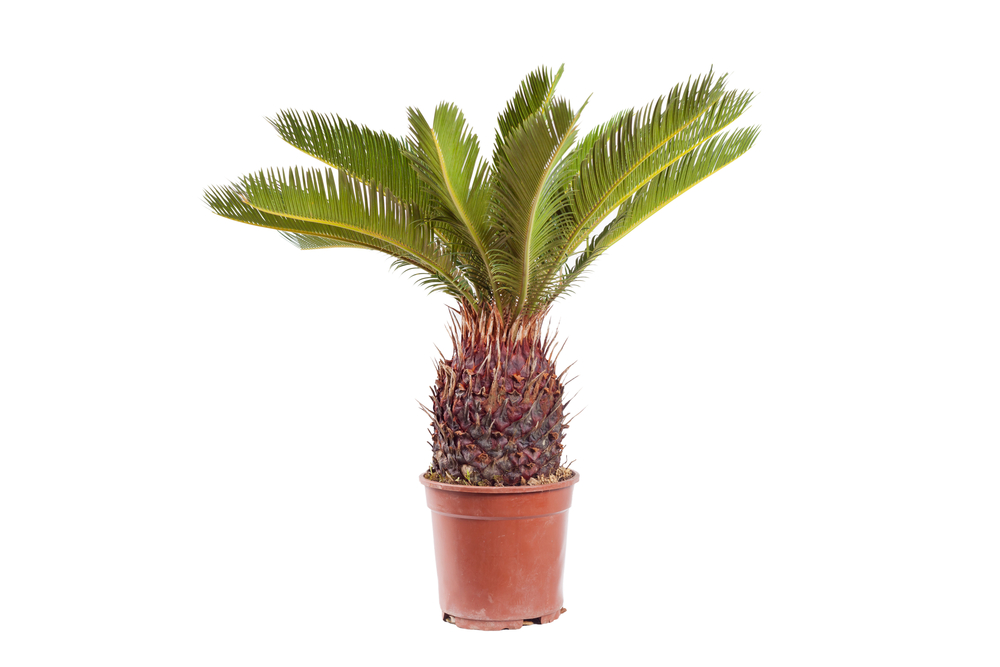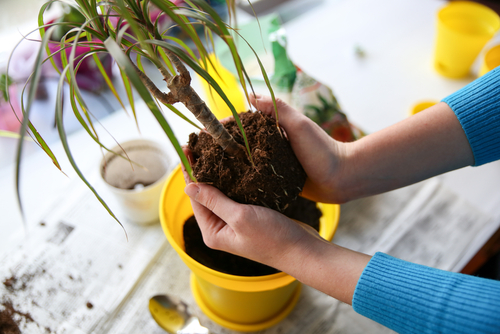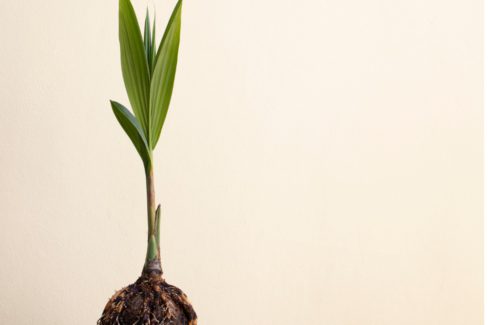
To keep your coconut palm happy and healthy, you’ll want to give it a new home about every two to three years. Getting the soil mix and pot size right is key—if the palm feels cramped or the soil is off, it’ll let you know by developing those dreaded brown, dying leaves.
The Right Soil Mix
Coconut palms aren’t big fans of super rich soil; they actually prefer something nutrient-poor and well-draining. You can grab a bag of specialized palm soil at the store, or if you’re feeling DIY, you can mix your own palm substrate at home.
Here’s a good recipe:
- 1/3 Garden soil
- 1/3 Sand
- 1/3 Expanded clay (leca) and compost
If your garden soil is already pretty rich, feel free to skip the extra compost.
Choosing the Pot Size
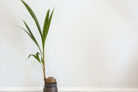
When your palm is just a “youngster,” it doesn’t need a massive pot. Something just slightly larger than the coconut itself works perfectly. However, as the palm matures, it develops a pretty extensive root system. If it runs out of legroom, you’ll start seeing those brown leaves again.
To save yourself from constant repotting, pick a pot that’s about twice the size of the coconut. For older, established plants, the pot should be at least twice as large as the root ball. If you’re worried about the pot getting too huge for your living room, you can actually trim back the roots of older palms a bit during the repotting process to keep things manageable.
When to Repot
Since coconut palms are in season year-round, there isn’t one “perfect” day to repot. Most gardeners find it easiest to do it in the spring or fall along with their other houseplants.
If you decide to repot in the heat of the summer, just keep a close eye on the moisture levels. The palm needs a little extra TLC until it settles into its new soil. I’d recommend keeping it in partial shade for the first few weeks or shading the soil surface to make sure it doesn’t dry out too fast.
The First Watering
Once your palm is settled in its new pot, give it a really thorough watering. You want to make sure all the soil is nice and moist. Just be careful not to let it sit in a puddle—check the saucer after about an hour and pour out any excess water so the roots don’t get soggy.