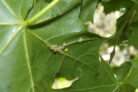
Various pests can make life difficult for your pear tree. Today, I’m going to introduce you to some of the usual suspects and show you how to prevent an infestation—or deal with one if they’ve already moved in.
These pests can be dangerous for your pear tree:
- Aphids
- Winter Moth
- Pear Bud Weevil
- Pear Buprestid (Jewel Beetle)
- Voles
Aphids
You’ll find a few different types of these tiny insects on pear trees. The standard green aphid drops by for a visit every now and then. Then there’s the Pear Bedstraw Aphid, which looks like it’s been dusted with flour. These dark gray pests usually hang out in large colonies on the undersides of leaves.
How to fight back:
- Remove and destroy any infested leaves.
- Give the leaves a good blast with a strong stream of water from your garden hose to knock the bugs off.
- Dust the colonies with rock flour (stone dust).
Winter Moth
The Winter Moth is a small moth (about an inch wide), but it’s the caterpillars that do the damage by munching on blossoms and leaves. You can spot these light gray caterpillars by the way they arch their backs like a “cat stretch” when they move, or by the silky webs they leave in the branches.
How to fight back:
- Apply sticky tree bands (grease bands) around the trunks to catch them.
- Practice good bark maintenance by scraping off loose bark and applying a tree wash or white trunk paint.
Pear Bud Weevil
These little snout beetles (about 1/4 inch long) have a thing for pear buds. In the fall, the females lay their eggs inside the buds. The larvae then develop inside, eating the bud from the inside out. Come spring, you’ll notice your tree isn’t blooming at all or is looking pretty sparse.
How to fight back:
- During their mating season in September, give the branches a good shake. Catch the falling beetles on a sheet and dispose of them.
- Place wooden boards under the trees. The beetles love dark places to sleep, making it easy for you to collect and remove them.
Pear Buprestid (Jewel Beetle)
This beetle is after the bark. The female lays her eggs there, and the larvae bore deep into the bark . Since it takes two years for a larva to grow into a beetle, they can do a lot of hidden damage over time.
How to fight back:
- Wrap the trunks tightly with fine garden netting or mesh to prevent the beetles from laying their eggs in the first place.
Voles
Voles can wreak havoc across your entire garden, but they find young roots especially delicious. This makes trees particularly vulnerable right after planting . If voles chew up the roots, the tree can’t take up water properly and might even die.
How to fight back:
- Vole traps and baits are available at garden centers, but keep in mind these can pose a risk to other wildlife.
- The best move is prevention: plant your tree in a “vole basket” or wrap the root ball in fine-mesh hardware cloth before it goes into the ground.
Pro Tip: To keep pest problems to a minimum, try to invite “the good guys” into your garden. Aim for a natural biological balance. Birds, spiders, ladybugs, and parasitic wasps are your best friends when it comes to keeping pest populations under control!