Even the hardiest pear tree can run into some trouble now and then. If your tree is looking a little under the weather, don’t worry—I’m here to help you spot the symptoms and get things back on track.
Pear Rust
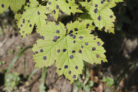
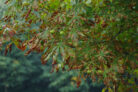
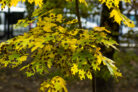
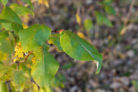
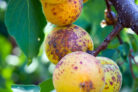
If you notice bright, neon-like yellow or orange spots on the tops of your pear leaves, you’re likely dealing with Pear Rust. If you flip the leaf over, you’ll see brownish-yellow swellings with a weird, cage-like texture—that’s actually how this fungus got its name. As the infection gets worse, those leaves will turn brown and drop off early.
This fungus is a bit of a traveler; it actually needs two different plants to complete its life cycle. It spends its winters on juniper bushes, where it looks like orange, jelly-like growths in the spring. When the spring weather gets damp, the spores take flight like a cloud of smoke and head straight for your pear trees.
Fighting it can be tricky. The best move is to remove any nearby infected junipers or at least prune out the diseased branches. For younger or smaller trees, a regular spray treatment with seaweed extract or horsetail tea can really help boost their defenses.
Here’s a quick recipe for Horsetail Tea:
- Soak 2 lbs of fresh horsetail in 2.5 gallons of water for 24 hours.
- The next day, simmer the mixture for about 30 minutes, then strain it.
- To use it as a spray, dilute it with water at a 1:5 ratio.
European Pear Canker
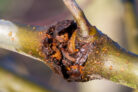
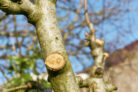
Pear trees can get “wounds” from pruning, frost cracks, or even a bad hailstorm. These openings in the bark are like an open door for fungus spores to move in and cause cankers. This is a year-round risk, especially when it’s rainy. Once the spores get inside, the tree tries to wall off the infection by creating lumpy, tumor-like growths. If the bark dies back, you might see white spore cushions in the summer, followed by tiny red fruiting bodies in the winter.
Prevention is Key
A healthy, happy tree is much less likely to get sick. When you’re picking a spot for your tree, make sure it has plenty of sun and well-draining soil. Also, keep an eye on your fertilizer; too much nitrogen can actually make the tree more susceptible to disease.
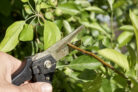
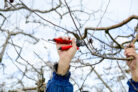
Taking care of the bark is also a big deal. A white trunk wash in the winter can prevent frost cracks. When you’re pruning , try to be as clean as possible and seal up any larger wounds with grafting wax to keep the “bad guys” out.
How to Treat It
- Act fast! Prune out any diseased parts of the tree and dispose of them (don’t compost them!).
- Scrape away infected bark until you reach healthy, green wood.
- Spray the tree with horsetail tea during the winter to keep fungal spores at bay.
- Apply a clay-based trunk paste to protect the bark from fungi.
DIY Protective Trunk Paste
- Crush up some clay or loam and mix it with water until it’s the consistency of thick paint.
- Mix in some horsetail tea (simmer 2-3 lbs of fresh or 6 oz of dried horsetail in 2.5 gallons of water for 30 mins, then dilute 1:5).
- Paint this mixture onto the trunk and the main structural branches.
Pro Tip: Keep a close eye on your trees! Catching a problem early—whether it’s a disease or a pest—is the secret to a long-lived, productive orchard.