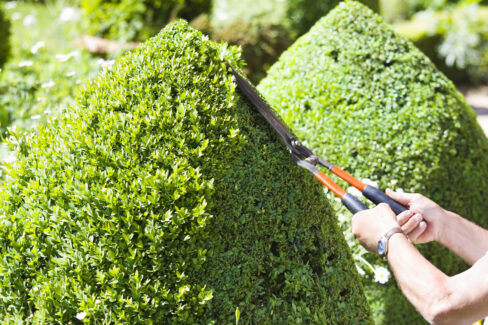
Ever felt like letting your creative energy run wild in the garden? Well, boxwood is the perfect canvas for it. You’ll quickly find out if you’re the type to take cautious snips or if you’re ready to swing those shears with confidence. But at the end of the day, the only thing that matters is that you and your family love the results! Let’s dive into the magical possibilities of this versatile shrub.
To Grow Wild or to Shape?
As an evergreen, boxwood is always a treat to look at. However, its dense growth and ability to handle pruning practically beg for a pair of shears. Once it’s shaped up, it becomes a real showstopper that draws the eye and earns plenty of compliments. Placed strategically, a well-kept boxwood can instantly level up your entire landscape.
While a formal Baroque garden is unthinkable without perfectly manicured boxwoods, how do they fit into other styles? That’s entirely up to you! Some folks think a sharp, geometric boxwood doesn’t belong in a wild, naturalistic garden. On the other hand, there’s nothing quite as striking as that contrast—it really makes the plant pop.
Geometric Shapes You Can Master
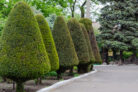
Boxwood is famous for its ability to hold clean, sharp lines. Here are a few geometric classics that look especially great in modern or Asian-inspired gardens:
Pro Tip:
If you want those edges perfectly straight or those curves perfectly even, try making or buying pruning templates. They take the guesswork out of the job and ensure a professional finish.
Get Creative with Topiary
If you’ve got a family garden, why not add a little whimsy with animal shapes? I’ve seen boxwoods transformed into green snails, elephants, squirrels, deer, and even teddy bears. Pruning these “critters” isn’t actually as hard as it looks, though it does help to have a good eye for proportions and a steady hand.
If you’re feeling bold, you could even try a human silhouette. If you’re a bit nervous, start with something simpler like a heart.
If you’re new to topiary, take it slow. Step back often to look at the plant from all angles before making the next cut. Boxwood grows slowly, so if you take too much off, you’ll be staring at that gap for a while!
Shaping Hedges and Patterns
It’s not just about individual plants. You can plant several boxwoods together and prune them so that, when viewed from above, they form intricate patterns or “knot gardens.” Your only limit here is the size of your yard—after all, most of us are gardening at home, not at a royal palace!
When to Start Trimming
The window for shaping your boxwood is open from April through September. How often you need to trim depends on how intricate the shape is—the more detailed the design, the more maintenance it needs. Most shapes require at least two trims a year:
- Do your main topiary pruning between mid-May and mid-June.
- Follow up with a maintenance trim by mid-August.
- Fast-growing varieties might need a few extra touch-ups.
- Always wait at least four weeks between pruning sessions.
Frequent trimming doesn’t just maintain the shape; it actually encourages the plant to grow denser. Try to avoid cutting back into the old wood if possible, so you don’t end up with temporary brown spots.
Pro Tip:
To keep your living sculptures looking lush and vibrant, fertilize regularly with nitrogen (and add some potassium in late summer). Most importantly, don’t let the soil dry out, especially during the heat of summer!