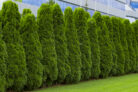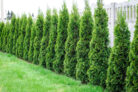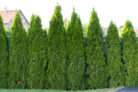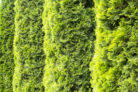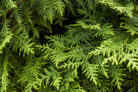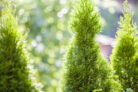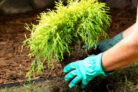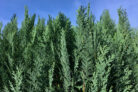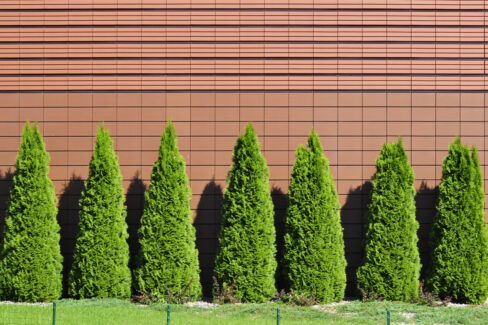
If you’re looking for a tough, low-maintenance evergreen, the Thuja Brabant (also known as American Arborvitae) is a fantastic choice. Because it grows so thick and sturdy, it’s a go-to for privacy hedges. However, even though we want a dense wall of green, you can’t just shove them right next to each other—they need a little breathing room to thrive.
What should you keep in mind regarding spacing for Thuja Brabant?
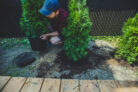
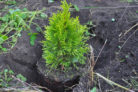
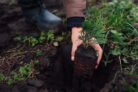
When you’re ready to plant your Thuja Brabant hedge, you’ll generally want to space the individual trees between 15 and 24 inches (40 cm to 60 cm) apart. A good rule of thumb: the taller the tree is when you buy it, the more space you should give it. This ensures the roots have plenty of room to spread out without competing for nutrients.
Beyond just the spacing between the trees themselves, you also need to make sure you aren’t planting them too close to:
- Sidewalks and pathways
- Garden beds
- Property lines
Why do you need to keep your distance from paths, beds, and boundaries?
The Thuja is a shallow-rooted tree. Instead of diving deep into the earth, its roots spread out wide like a plate, staying relatively close to the surface. If they get too close to a sidewalk or patio, those roots can actually lift up pavers or crack the concrete. They can also creep into your flower beds and stir up your other plants. To play it safe and avoid damage, a common recommendation is to plant the hedge as far back from these structures as you expect the tree to grow in height. Fortunately, you usually don’t have to worry about them damaging house foundations or deep utility lines.
Also, don’t forget about the “neighbor factor.” Most local municipalities or HOAs have specific rules about how close you can plant to a property line or a public street. In many areas, the law requires you to set the hedge back based on its eventual height. It’s always a smart move to check with your local city hall or planning office first.
If you ignore these guidelines, you might find yourself in a sticky situation where a neighbor or the city legally requires you to dig up your trees. Depending on how big they’ve grown, that can be a massive physical chore or a costly professional job you’d probably rather avoid!