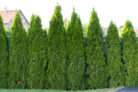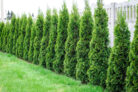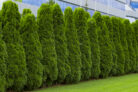
Because they’re so hardy and easy to care for, Thujas (also known as Arborvitae) are a go-to choice for privacy hedges. But they also look great as a standalone decorative tree! To make sure your planting project is a total success, I’ve put together this handy guide for you.
What should you keep in mind when planting a Thuja?
Before you start digging, you’ll want to think about which variety best fits your garden goals. It also makes a difference whether you’re planting a single specimen or a full hedge. Here are the big things to consider beforehand:
The Right Spot
Arborvitae love a sunny or partially shaded spot. Just be careful with intense midday sun in the heat of summer—it can actually scorch young plants. On the flip side, a very shady spot will stunt their growth. Young trees are also a bit sensitive to wind, so try to avoid planting them in a “wind tunnel” area. Your tree will thrive in standard garden soil, as long as it meets these criteria:
- Well-draining
- Consistently moist
- Not too acidic
- Rich in organic matter (humus)
Choose your spot wisely! A mature hedge is incredibly difficult to remove. You can really only transplant very young, individual trees. Once a hedge is established, the roots intertwine so much that moving them is nearly impossible.
The Best Time to Plant
You can get your Thuja in the ground as soon as the soil has warmed up a bit. Depending on the weather, this is usually around April. Early fall is also a great time to plant. If you go with a fall planting, just be sure to protect your young tree with a layer of mulch to help it get through its first winter.
Getting the Spacing Right
The perfect distance between plants depends on a few things:
- The specific variety
- Whether it’s a hedge or a standalone tree
- Property lines
- Proximity to roads and sidewalks
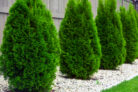
If you’re planting a single Thuja, leaving about 3 feet (1 meter) of space from neighboring plants is usually plenty. For a dense privacy hedge, the variety makes a big difference. For example, a Thuja Brabant should be spaced about 15 to 24 inches apart. The popular Thuja Smaragd (Emerald Green), however, needs at least 24 inches between saplings—though 30 inches is even better. If you plant them too close, the roots will end up competing for nutrients.
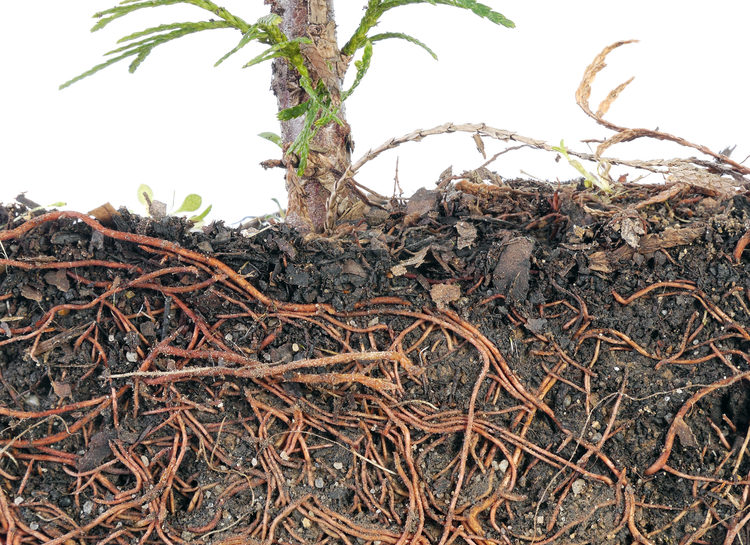
Arborvitae are shallow-rooted plants. Their roots spread outward rather than deep into the ground. This means they’re unlikely to damage underground utility lines, and walls or foundations are usually safe too. However, sidewalks and pavers are a different story—the roots can eventually lift them up. A good rule of thumb is to leave a gap equal to the expected final height of the tree.
Also, don’t forget the legal side! Most local municipalities have rules about how close you can plant to a property line, often based on the tree’s potential height. It’s always a good idea to check with your local building department or HOA first. If you don’t follow the rules, you might be forced to remove your trees—and trust me, digging up an established hedge is a workout you don’t want!
How do you plant an Arborvitae correctly?
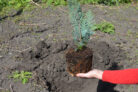
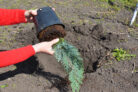
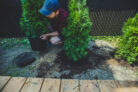
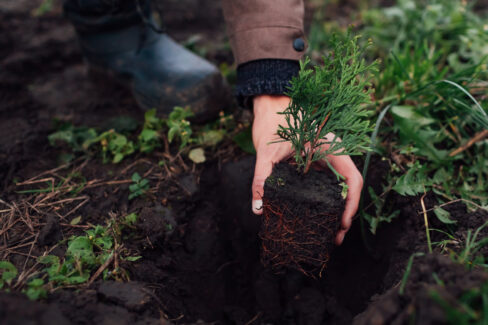
Before you put your Thuja in the ground, you need to give the roots a good soak. Place the root ball in a bucket of water for about 24 hours. While the tree is soaking, you can prep the soil by:
- Digging over the soil thoroughly
- Removing weeds, rocks, and old roots
- Digging a large planting hole
- Mixing in some compost or manure along with some horn meal
- Adding sand or gravel if you need to loosen up heavy soil
- Giving the soil a quick water if it’s very dry
Step-by-Step Planting Guide
The actual planting isn’t rocket science! Just follow these steps:
- Carefully place the tree into the hole. The hole should be about twice as wide as the root ball.
- Fill the hole back up with soil. Gently shaking the tree as you fill helps the soil settle into the gaps.
- Press the soil down firmly with your foot.
- Give the tree another thorough watering.
- Keep a close eye on it over the next few days—it will need plenty of water to get established.