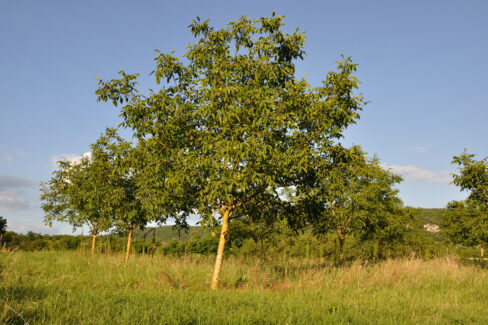
Just like the branches of a walnut tree reach far and wide into the sky, its root system is doing the exact same thing underground. Walnut trees are classic “deep-rooters.” Let’s dive into what that actually means for your backyard and look at some of the fascinating traits these roots have.
The Walnut Tree: A Deep-Rooting Specialist
The walnut tree is a deep-rooter that starts its life with a primary taproot. Basically, this means the roots dig straight down into the earth like a stake. This is the total opposite of shallow-rooting trees, which spread their roots out just a few inches below the surface.
The Power of the Taproot
A taproot is a specialized root that develops from the very first seedling root into a massive main anchor. This main root grows vertically deep into the soil. From there, lateral roots branch off horizontally or diagonally. In a walnut tree, this central taproot is significantly longer and thicker than any of the side roots.
Why So Deep?
The reason walnut trees grow this way comes down to their history. They originally hail from warm, dry regions where surface water wasn’t always a guarantee. To survive, the tree had to “drill” deep into the earth to tap into underground water reserves. Thanks to this deep and wide-reaching system, walnut trees are absolute pros at handling droughts without breaking a sweat.
The “Heart-Rooter” Hybrid
You’ll often hear gardeners call the walnut tree a “heart-rooter” as well. This refers to a root system that grows in a compact, semi-spherical shape with a few very strong lateral roots. Think of it as a middle ground between a shallow-rooter and a deep-rooter.
Give It Some Space: Planting Near Buildings
Because walnut roots are so powerful and expansive, you really need to think ahead when planting your walnut tree. You’ve got to keep a respectful distance from other plants and, more importantly, from buildings. Those roots are strong enough to cause serious damage to foundations and walls over time. My rule of thumb? Keep the tree at least 30 feet (10 meters) away from your house or any other structures.
Digging Up Walnut Roots
If you ever need to dig up a walnut tree to move it to a new location, be prepared for a workout! For young trees, the root system hasn’t fully branched out yet, so you can usually get them out with a bit of elbow grease.
However, with older trees, it’s a different story. They develop thick, deep roots that can be a real nightmare to reach. If you’re tackling a mature tree, you might need to call in the big guns—like heavy-duty garden equipment or even a mini-excavator. Just remember: if you’re transplanting, try to keep the root ball as intact as possible and avoid damaging those main structures.