Unlike many other herbs that thrive on neglect, basil is actually a “heavy feeder.” Even though it’s a relatively small plant, it has a huge appetite for nutrients. If you want those lush, fragrant leaves all summer long, here’s what you need to know about keeping your basil well-fed.
The Right Soil for Your Basil
Basil can be a bit of a diva when it comes to its living conditions. To really see it thrive, you need soil that is loose, well-draining, and packed with organic matter. Rich soil is the foundation of a happy plant.
Whether you’re planting in the garden or in a pot , a high-quality potting mix or compost-rich garden soil works best. If your soil is heavy or clay-like, make sure to mix in some coconut coir or expanded clay pebbles to improve drainage—basil hates “wet feet.”
Interestingly, standard “herb soil” mixes often don’t have enough nutrients for basil. If you use one, I recommend boosting it with organic fertilizer. Horn meal (crushed horns/hooves) is a fantastic slow-release option to mix in right at the start.
Choosing the Best Fertilizer
To grow all those delicious leaves, basil primarily needs nitrogen. To give your plants a head start, you can enrich the soil with organic fertilizer the moment you start planting .
As mentioned, horn meal is a nitrogen powerhouse. It’s an excellent slow-release fertilizer because it breaks down gradually, feeding your plants over a long period.
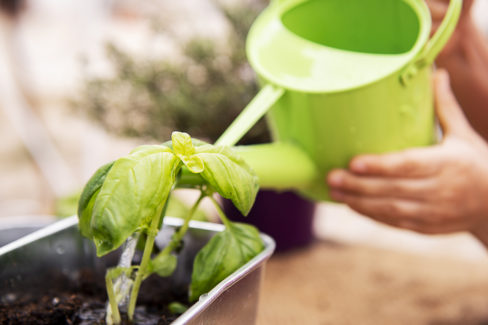
If you notice your plant looking a bit sad or developing yellow leaves , it’s likely a nutrient deficiency. In this case, a liquid organic fertilizer is your best friend. It’s easy to dose, and the plant can absorb the nutrients almost immediately.
Want to try a DIY approach? You can make your own “stinging nettle tea” (liquid manure). It’s a classic gardener’s secret! Here’s how:
- Harvest nettle plants and chop them up roughly.
- Place them in a watertight container and fill it with water.
- Let the mixture sit for about four weeks, stirring daily (fair warning: it gets smelly!).
- To use it, dilute it at a ratio of 1 part nettle tea to 10 parts water.
Another great kitchen hack is using coffee grounds. They are rich in nitrogen and have the added bonus of keeping slugs away. Just dry the grounds first, sprinkle about a tablespoon over the soil, and lightly work it in.
What to Avoid
I’d stay away from synthetic mineral fertilizers for your basil. These can cause nitrates to build up in the leaves, which isn’t great if you’re planning to eat them.
The downside of these chemical fertilizers is that they take a lot of energy to produce and don’t do anything to support the “life” of your soil (like beneficial microbes). While they provide a quick nutrient hit, organic options are much better for a kitchen herb garden.
Pro Tip: Don’t toss your old tea! Green and black tea contain nutrients that basil loves. You can pour cooled tea directly onto the soil or mix used tea leaves into the dirt. Your basil will thank you!