If you’re lucky enough to have a Monstera in your plant collection, you probably already know that keeping it hydrated is key. These South American beauties are pretty hardy, but they won’t reach those jungle-sized goals without the right amount of water. Not sure if you’re doing it right? Here’s the lowdown on how to keep your Swiss Cheese Plant happy and hydrated!
Watering Your Monstera the Right Way
The Monstera (or “Swiss Cheese Plant,” as we love to call it) hails from the tropical rainforests of Central and South America, so it’s used to a warm, humid vibe. When you’re growing one at home, getting the watering routine down is the most important part of its care. The tricky thing is that there’s no “one size fits all” schedule—you really have to go by what your plant is telling you.
How much water your Monstera needs depends on a few things: where it’s sitting in your house, the time of year, and just how big the plant has grown. To get it just right, follow these pro tips:
- Keep the soil consistently moist but not soggy.
- Let the top inch or two of soil dry out slightly before watering again.
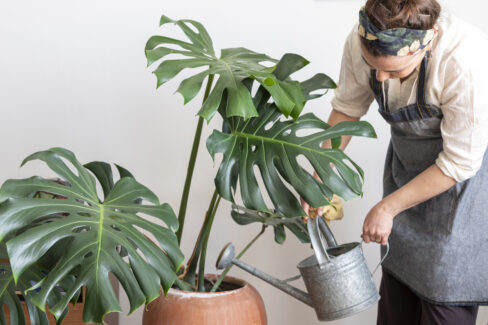
- When you do water, give it a good soak until water runs out the bottom.
- Let the pot sit for about ten minutes, then make sure to empty the saucer so the roots aren’t sitting in standing water.
- Your Monstera loves humidity! Mist the leaves regularly with filtered water to mimic that rainforest feel.
When it comes to the water itself, try to use rainwater or filtered tap water. Monsteras can be a bit sensitive to the minerals in hard tap water, which can lead to leaf chlorosis. That’s basically a fancy way of saying the leaves turn yellow and eventually drop off.
The Aquarium Hack
Got a fish tank? Then I’ve got a cool “lazy gardener” tip for you! Place your Monstera right next to your aquarium and gently guide the aerial roots into the water. Your plant will basically start watering itself, meaning less work for you.
Even better? It’s a win-win for everyone. The Monstera acts as a natural filter by sucking up nitrates (which are great for the plant but bad for the fish), and the roots create a cozy little underwater jungle for your fish to hide and play in.