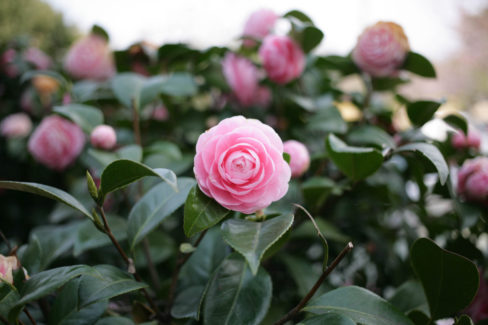
Even though camellias are generally known for being pretty low-maintenance, getting the watering just right can be a bit of a head-scratcher for many home gardeners. To make sure your *Camellia japonica* truly thrives under your care, let’s break down how to keep this beauty hydrated the right way.
The Basics
Mastering the art of watering camellias is all about finding that “Goldilocks” zone—not too much, not too little. You never want the soil to dry out completely. If it gets bone-dry, the plant might keep growing leaves, but it’ll likely skip the flowering stage entirely.
On the flip side, “wet feet” (standing water) is just as bad. When roots are submerged, they can’t breathe and will eventually start to rot, which means they can’t send nutrients up to the rest of the plant. To prevent this, I always recommend adding a drainage layer of expanded clay pebbles in pots or mixing some sand into your garden beds.
The *Camellia japonica* Water Cycle
Timing is everything! During the blooming season, your camellia is going to be pretty thirsty. However, that demand drops off significantly starting in late summer. As the warm weather winds down, start scaling back your watering. By winter, they barely need any water at all. The cycle resets once you see those first flower buds peeking out the following year—that’s your cue to start increasing the water again.
What Kind of Water is Best?
It’s not just about how much you water, but *what* you’re pouring into the soil. For a healthy, happy camellia, rainwater is your absolute best bet. Here’s why it’s the gold standard:
- It’s naturally soft (lime-free)
- It’s usually at a mild, ambient temperature
- It doesn’t contain the harsh chemicals found in some tap water
A Pro Tip: The “Deep Soak” Method
If you want to treat your camellia to something even better than a watering can, try a full root soak. Fill a bucket with room-temperature water and submerge the root ball until the air bubbles stop rising. Before you pop it back into its decorative planter, make sure to give it a good shake to let the excess water drain off. You want the roots damp, not drowning, to avoid that dreaded root rot.