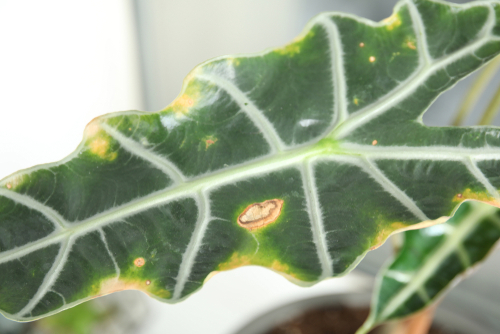
If you’ve noticed dark brown spots with lighter “halos” popping up on your Yucca leaves, you’re likely dealing with a fungal leaf spot infection. The most common culprit here is a fungus called *Coniothyrium concentricum*. If left unchecked, those spots will take over, turning the leaves yellow until they eventually die off.
The Root of the Problem
So, why is this happening? Usually, it comes down to too much moisture. For Yuccas planted outdoors in the garden, this often flares up after a particularly wet winter. For potted Yuccas, high humidity or water droplets sitting on the leaves—whether from rain or a slip-up while watering—create the perfect breeding ground for fungi.
How to Fight Back
Fungal infections can spread like wildfire, so you’ll want to act fast. The earlier you catch it, the better your chances of saving your plant.
Step 1: Isolate Your Yucca
Fungi aren’t picky—they’ll happily jump to your other plants. If your Yucca is in a pot, move it away from your other green friends immediately. If it’s planted in the ground, you’ll want to treat the neighboring plants as a precaution to keep the fungus from spreading.
Step 2: Prune the Infected Leaves
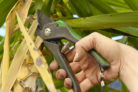
Your next move is to get rid of the source. Cut off any spotted leaves as close to the trunk as possible (or near the ground if it’s a trunkless variety). This helps slow down the spread and keeps the rest of the plant a bit safer.
Step 3: Try Home Remedies for Mild Cases
If you caught the infection early, you might not need the heavy hitters yet. Traditional organic sprays made from steeped herbs can work wonders. Try making a “tea” or infusion from:
- Stinging nettle
- Horsetail
- Tansy
To apply the treatment:
- Wipe down the leaves with a soaked cloth, or
- Give the whole plant a thorough spray.
Don’t forget to treat nearby garden plants too! Repeat this process several times a week until you’re sure the fungus is gone.
Step 4: Use Fungicides for Tough Cases
If the fungus is winning the battle, it’s time to bring out the fungicides. Since it’s hard to identify the exact fungal strain without a lab, your best bet is a broad-spectrum fungicide or one containing sulfur or copper.
Step 5: Starting Over
If the plant looks like a lost cause, don’t give up entirely! You can try a “radical prune.” If there are any healthy sections left, you can use them to propagate a brand-new, healthy Yucca. It’s not exactly how most people plan to grow their collection, but it’s a great way to save the plant’s legacy!