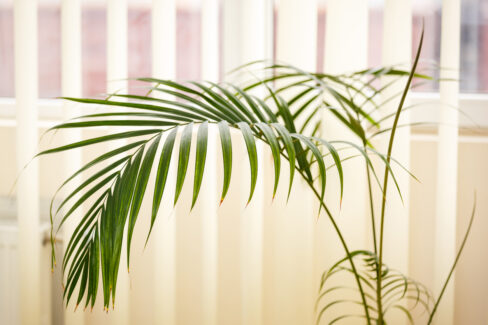
The Kentia palm is a fantastic indoor plant, even if you’re just starting your green thumb journey. One of the best things about them is that they’re great communicators—if something’s wrong, they’ll usually let you know through their leaves so you can jump in and fix it. A common issue people run into is brown spots, but don’t panic! Usually, a quick tweak to your care routine is all it takes to get them back on track.
Sunburn
It happens to the best of us: you bring home a gorgeous new plant, and a few days later, you’re shocked to see brown spots on the leaves. In most cases, the culprit is pretty simple—your palm just hasn’t adjusted to its new home yet.
In garden centers, these palms are usually kept in spots protected from direct sun. If you move yours into a bright, sunny window right away, it hasn’t had time to build up its natural “sunscreen.” To avoid this, acclimate your plant slowly by moving it from a shadier spot to a brighter one over several days. With a little patience, your Kentia can definitely learn to love a sunny spot.
Nutrient Deficiency
While it’s not super common, sometimes your palm might be hungry. A lack of nutrients can show up in a few different ways, but the leaves are always the first to tell the story.
Keep an eye out for:
- Entirely brown leaves
- Yellowing leaves
- Small brown spots
When you fertilize your Kentia palm, make sure you’re giving it the right fuel. I recommend a liquid fertilizer that’s high in nitrogen and potassium. During the growing season (from spring through fall), just add it to your watering can once a month.
The Cold
Kentia palms are originally from Australia, so as you can imagine, they aren’t exactly fans of the cold. If you pick the wrong location, your leaves are going to suffer. Your palm wants a spot that is bright and, most importantly, protected.
Keep it away from drafty doors or AC vents. During the winter, they’re happiest in heated sunrooms or placed in the center of a large window area where they won’t be touching chilly glass or catching a cold breeze.
Moisture and Watering
Kentia palms are a bit like Goldilocks when it comes to water—they want it “just right.” Both overwatering and underwatering can cause brown spots. However, overwatering is the bigger danger here because it leads to standing water at the roots, which can cause permanent damage.
As a general rule of thumb, you’ll want to water your palm about every five days. But before you pour, always check the soil first. A moisture meter is a total game-changer here; you just stick it in the soil, and it tells you exactly how thirsty the plant is. You’re aiming for that sweet spot right in the middle—not bone dry, but not soggy either.