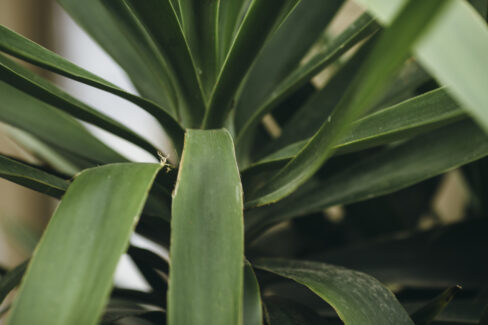
For any gardener, spotting aphids or scale is enough to ruin a perfectly good afternoon. Unfortunately, our beloved Yucca plants (Adam’s Needle) are often right at the top of the menu for these sap-sucking pests. But don’t panic! If you keep a close eye on your plants and know how to react, you can keep these uninvited guests under control.
Plant Lice & Pests
Plant lice are pests that literally drain the life out of your greenery by feeding on the sap. This hits your Yucca with a double whammy: first, it loses vital nutrients, and second, the tiny puncture wounds damage the leaf structure, which can eventually cause the leaves to die off.
The most common culprits you’ll find hitching a ride on your Yucca are:
- Aphids
- Scale insects
- Mealybugs
Aphids
What they look like:
- Tiny (only a few millimeters long), but you can still spot them with the naked eye.
- They come in a variety of colors like yellow, brown, black, or green. (Pro tip: The green ones are the hardest to spot because they blend right in!)
Signs of trouble:
- You’ll usually see a few “scouts” on young leaves or new growth first.
- Before you know it, they’ve formed massive colonies—they multiply incredibly fast!
- A sticky residue on the leaves known as “honeydew.”
- If your Yucca is out on the balcony, watch for ants marching up and down or flies hanging around; they’re there to snack on that sweet honeydew.
- A blackish-gray coating (sooty mold), which is a fungus that grows on the honeydew.
What to do:
- Give your Yucca a thorough “shower” with a garden hose or in the tub to knock them off.
- Spray the plant with a mixture of water and tea tree or lavender oil.
- Invite the “good guys” over! Natural predators include ladybugs (and their larvae), hoverfly larvae, lacewings, spiders, and birds.
Scale Insects
What they look like:
- About 1 to 3 millimeters long.
- Light to dark brown in color.
Signs of trouble:
- These guys are sneaky; they often look like small brown bumps or spots on the underside of the leaves.
- Sticky honeydew on the foliage.
- Just like with aphids, look for ants or flies attracted to the sticky mess.
- Appearance of sooty mold, a fungus that thrives on their secretions.
What to do:
- Gently brush the insects off the leaves.
- Wash the plant down with soapy water.
- Be persistent! You’ll likely need to repeat this treatment several times to get them all.
Mealybugs
What they look like:
- About 2 to 3 millimeters long.
- Bright white.
Signs of trouble:
- You’ll see white, cottony puffs on the underside of the leaves.
- If you look closely at those “cotton balls,” they usually contain pinkish eggs or larvae.
What to do:
- Use a soft brush to scrub the leaves.
- Wash the plant with a mild soap solution.
- For those hard-to-reach “cottony” spots in the nooks and crannies, use a pencil or a cotton swab to clear them out.
- Keep at it—repeat the process until your Yucca is pest-free.