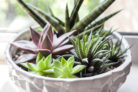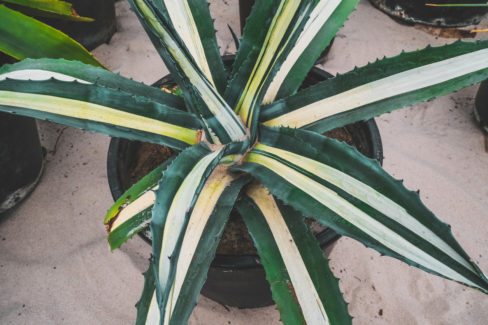
Agaves aren’t just showstoppers in a succulent garden; they actually make fantastic container plants! If you’re looking to add some desert vibes to your balcony or patio, choosing the right variety is key. While some agaves get massive, there are plenty of “compact” species that are perfectly happy living in a pot.
Here are four of my favorite agave varieties for container gardening:
4 Best Agave Varieties for Pots
While giants like the *Agave americana* will quickly outgrow any pot you put them in, compact varieties stay manageable and look stunning in limited space. Out of the 50+ smaller species out there, these four are popular, beautiful, and super easy to care for:
- Agave victoriae-reginae: Often called the “Queen Victoria Agave,” this one is a real beauty. It grows in a tight, geometric rosette with dark green leaves that reach about 6 inches long. You’ll need a little patience with this queen, as she only grows a few leaves a year, but she can live for up to 20 years!
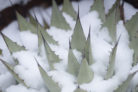
- Agave filifera: Known as the “Thread-leaf Agave,” this medium-sized plant is a total conversation starter. Its bright green leaves feature white threads peeling off the edges, which look amazing against its sharp, black leaf tips.
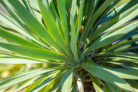
- Agave stricta: This variety has long, needle-like leaves that are only about a quarter-inch wide. Because of its spiky, rounded silhouette, it’s often nicknamed the “Hedgehog Agave.”
- Agave potatorum: This one gets a whimsical nickname from the animal kingdom: the “Butterfly Agave.” Its blue-green, egg-shaped leaves have wavy edges that look just like a cluster of butterfly wings.
Care Tips and Tricks
If you’re keeping your agave indoors, a south-facing window is your best bet. Like their desert cousins, potted agaves crave as much direct sunlight as they can get. When it comes to water, the “less is more” rule definitely applies. Only water your agave when the potting soil or substrate is completely dry and crumbly to the touch. Overwatering is the fastest way to cause root rot and yellow leaves.
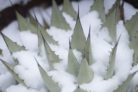
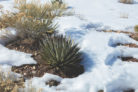
Most compact agaves aren’t fans of the frost. The great thing about container gardening is that you can easily move them inside when the temperature drops! Just remember to reintroduce them to the intense summer sun gradually after their winter break so they don’t get “sunburned.”
Pro Tip: To save yourself some work and avoid repotting too often, choose a container that gives your agave enough room to grow comfortably for the next two or three years!