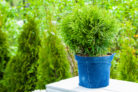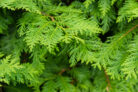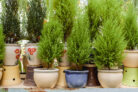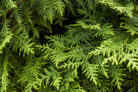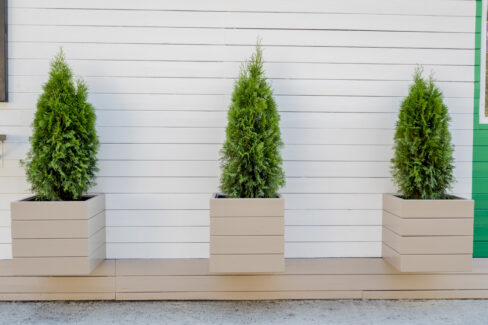
Thanks to their dense, evergreen foliage, Thuja (often called Arborvitae) is a go-to choice for privacy hedges. But did you know you don’t need a huge backyard to enjoy them? Smaller varieties do great in containers, making them a stylish way to add some green privacy to your balcony or patio. Just keep in mind that a potted Thuja needs a little more TLC than one planted in the ground.
Which Thuja varieties work best in pots?
Arborvitae comes in all shapes and sizes—some can tower up to 60 feet, while others stay a cute 20 inches tall. If you’re planning on container gardening, you’ll want to stick with dwarf or slow-growing varieties. Here are a few of my favorites:
- Danica
- Golden Globe
- Golden Tuffet
- Little Giant
- Tiny Tim
How do you plant an Arborvitae in a container?
First things first: you need the right pot. Aim for something about twice the size of the root ball, ideally made of clay or terracotta. The most important feature? Drainage holes! Thujas absolutely hate “wet feet” and are very prone to root rot if they sit in water. I recommend adding a drainage layer of gravel or expanded clay at the bottom. Also, skip the saucer—rainwater can collect there and drown the roots.
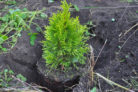
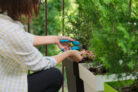
As for the soil, Thujas aren’t fans of high acidity. Your best bet is a high-quality potting mix specifically designed for conifers. Pro tip: Give your Thuja a good soak in a bucket of water the day before planting to help it settle into its new home more easily. Once it’s potted, you can get creative! You can grow a mini-hedge, try your hand at topiary shapes, or even prune it into a standard (tree-form).
How do you care for a potted Thuja?
To keep your Thuja looking lush and healthy in a container, you’ll need to stay on top of a few chores:
- Consistent watering
- Light fertilizing
- Occasional pruning
- Winter protection
- Repotting when necessary
Once your Arborvitae starts outgrowing its home, it’s time for a bigger pot—early spring is the best time for this move. Remember, plants in pots are more vulnerable to the cold than those in the ground. If you live in a chilly climate, move the pot to a frost-free spot for the winter. If it has to stay on the balcony, wrap the container in an old blanket, burlap, or garden fleece to keep the roots from freezing.