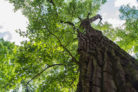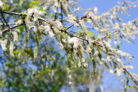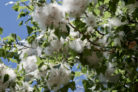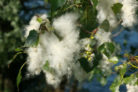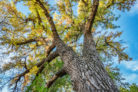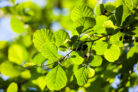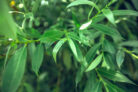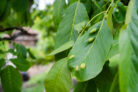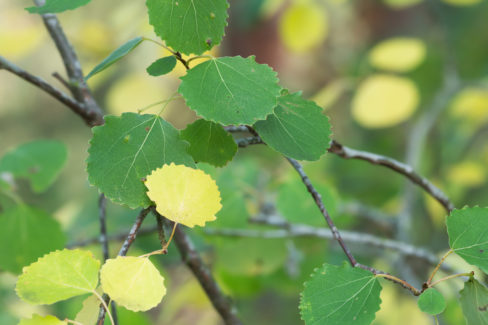
From spring through fall, there’s one tree you can’t miss: the poplar. These trees sway so gracefully in the breeze, and their tiny, flexible leaves rustle at even the slightest hint of wind. During the growing season, they show off shades of fresh lime or deep forest green, before putting on a show with brilliant yellow foliage in the autumn.
Poplar Leaves: The Basics
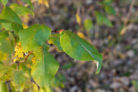
The leaf is actually one of the best ways to tell different poplar species apart. Depending on which variety you’re looking at, you might find leaves that are:
- Triangular
- Egg-shaped (ovate)
- Diamond-shaped (rhombic)
- Smooth-edged, lobed, notched, or wavy
- Fuzzy or smooth on the underside
- Attached to long or short stems
Most poplar leaves sit on long, slender stems. This delicate structure is exactly why the tree’s canopy seems to be in constant motion. If you take a closer look, you’ll notice that different leaf shapes can grow on the very same tree! This happens because the shape depends on when the leaf bud was formed (summer vs. winter) and where on the branch it’s growing. You’ll also notice that poplar leaves only make their appearance after the tree has finished blooming.
All poplars are deciduous, meaning they drop their leaves every fall. Before they hit the ground, they transition into beautiful shades of golden yellow, light brown, or even reddish tones.
Identifying Different Poplar Species by Their Leaves
While almost all poplar leaves share a basic triangular or heart-shaped “blueprint,” the specific variations are what help us identify the subspecies.
The Quaking Aspen
The Quaking Aspen (or Trembling Poplar) starts the season with fuzzy leaves that have a bluish underside. They are nearly round with long stems and lobed edges, and they “quake” or shimmer in the tiniest breeze. Interestingly, if the tree grows new leaves later in the summer, those tend to be more triangular with smooth edges. In the fall, they turn a stunning golden yellow.
The White Poplar
The White Poplar is a bit of a shape-shifter. Its first leaves have long stems and a lobed shape that looks a lot like a maple leaf, with a white, felt-like fuzz underneath. Leaves that develop later in the season are shorter-stemmed, egg-shaped, and have wavy edges with much less fuzz. These also turn yellow in the fall.
The Balsam Poplar
These leaves have a lovely fragrance when they first emerge! They are dark green and range from egg-shaped to almost lance-like, usually ending in a distinct long point. The undersides are slightly hairy, and the edges are finely toothed (serrated).
The Black Poplar
On this variety, the leaves on long shoots are diamond-shaped, while those on shorter shoots are more egg-shaped. Both sides are green and smooth (no fuzz here!), with finely serrated edges. Look for them to turn yellow in autumn.
The Canadian Poplar
This one features triangular to egg-shaped leaves. They are a striking, glossy dark green with notched (crenate) edges.
The Grey Poplar
Grey Poplar leaves are round to egg-shaped with lightly lobed edges. When they first sprout, both sides are covered in a silvery, felt-like fuzz. As they age, only the underside keeps that signature grey, fuzzy texture.
The Lombardy Poplar
The leaves on this columnar tree are similar to the Black Poplar—diamond or egg-shaped. They have notched edges and grow in an alternating pattern along the branches.