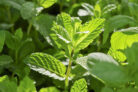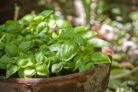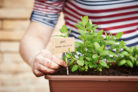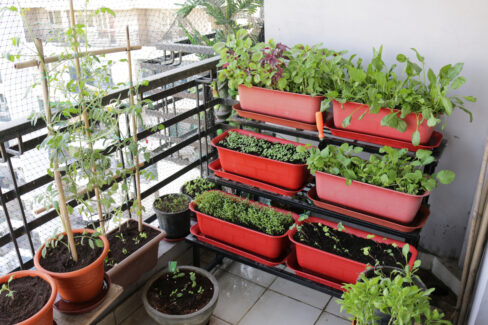
If you love herbs, you probably love *a lot* of them. But if you don’t have a backyard, your kitchen windowsill can get crowded pretty fast. The solution? Take it outside! As long as you’ve got a spot that gets plenty of sun, you can get creative and whip up a thriving herb garden on your balcony or patio.
Is a Balcony Garden Just a “Plan B”?
You might think a balcony herb garden is just a consolation prize for people without a “real” garden. Think again! Even if you have a massive backyard, there are some serious perks to keeping your herbs on the balcony:
- Protection: Overhangs and walls shield your plants from heavy rain and wind.
- Heat Storage: Walls soak up the sun’s warmth during the day and release it at night—herbs love that!
- Convenience: Your fresh ingredients are just a few steps away from the kitchen.
- Eco-friendly Watering: You can easily reuse chemical-free leftover water from the kitchen.
- Pest Control: Your herbs are safely out of reach from slugs, snails, and mice.
Plus, flowering herbs like lavender or sage look absolutely stunning and double as natural decor for your outdoor space.
Space and Sun: The Non-Negotiables
Most herbs are sun-worshippers, especially the Mediterranean varieties. Even the ones that prefer a little shade still need plenty of light. A north-facing balcony that stays dark and chilly just won’t cut it for a successful herb garden. Ideally, you want a south-facing spot where you can provide a little shade if things get too intense.
Also, don’t try to cram too many plants into one tiny spot. If you’re short on space, it’s better to grow fewer, healthier plants than to have them fighting for elbow room.
Creative Ideas for Your Balcony or Patio
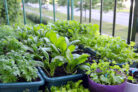
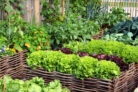
There are tons of ways to set up an herb garden depending on your layout. Here are a few of my favorite ideas:
- A cluster of different-sized pots (just make sure they have drainage holes!)
- Classic long window boxes
- An arrangement of hollow planter blocks
- A vertical garden made from a wooden pallet
- A small wooden crate lined with landscape plastic
If you have a patio, you could even go for a stone herb spiral or use raised beds to create a beautiful green border around your seating area.
Building a Vertical Pallet Garden
Most herb setups are pretty self-explanatory, but the pallet garden is a DIY favorite that saves a ton of floor space. Here’s the quick version of how to do it:
- Use the underside of the pallet as your planting side.
- Secure it firmly to a wall or lean it at a slight angle.
- Attach three horizontal slats underneath the support blocks to create “pockets.”
- Line these pockets with landscape plastic or buy pre-made inserts that fit right in.
Choosing the Right Soil
There’s no “one size fits all” when it comes to soil. Herbs generally fall into two camps: the “hungry” ones that need lots of nutrients and moisture, and the “modest” ones that like it dry and lean. Since it’s hard to give them both what they want in one small container, try to group them separately.
- For Mediterranean herbs: Use a lean herb soil and mix in some sand for drainage.
- For “heavy feeders” (like Basil): Use a loamy soil mixed with a bit of compost.
When to Start Planting
You’ll want to get your herb garden going in the spring, but don’t jump the gun! Late April or early May is usually the sweet spot. Using nursery-bought starts or plants you’ve started indoors gives you a massive head start. You *can* sow seeds directly into the soil, but you’ll have to be patient before you see any green.
Which Herbs Play Nice Together?
Just like people, some herbs are better neighbors than others. A good rule of thumb: don’t mix annuals with perennials, and group plants with similar water and light needs. Here are a few tried-and-true pairings:
- Mediterranean herbs (thyme, rosemary, oregano) generally love living together.
- Parsley is a bit picky—it likes dill, cress, basil, chervil, or chives.
- Basil is happy next to parsley, oregano, and rosemary.
- Chamomile gets along great with dill, chervil, and marjoram.
- Thyme, savory, borage, tarragon, and coriander can all share a box.
- Savory loves being near lavender and hyssop.
Pro Tip: If you want to keep uninvited guests away from your patio table, try planting herbs that repel wasps. The essential oils in these plants smell great to us but are a total “no-go” for wasps!
A Little Extra TLC
Keep in mind that balcony herbs need a bit more attention than those in the ground. They dry out faster, so you’ll need to water more often and give some varieties a bit of fertilizer now and then.
If you’re cooking with them regularly, you won’t really need to prune them much—just make sure to harvest entire stems rather than just plucking leaves; this encourages the plant to branch out and grow bushier. When winter rolls around, protect your perennials with some burlap or evergreen branches. For the non-hardy types, bring them inside to a cool, frost-free spot until spring!