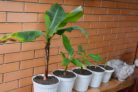
Banana plants are definitely a lesson in patience—it usually takes about 2 to 5 years before you’ll see a single bloom. Only then do those tiny bananas start to develop. While seeing a homegrown harvest is pretty rare in cooler climates, the banana remains one of the most fascinating and healthy fruits out there. Let’s dive into some fun facts about this tropical favorite!
The History of the Banana
Did you know people were snacking on bananas in Southeast Asia as far back as 2,600 years ago? From there, they traveled across the globe. Arab traders first introduced them to Africa, and by the 15th century, Portuguese sailors brought them to the Canary Islands. It wasn’t until the 16th century that they finally made it to the Americas by sea. Fast forward to the 19th century, and bananas started being exported to Europe. Today, they are a massive part of the global economy and sit right at the top of the list of favorite fruits worldwide, often second only to apples.
The Bloom
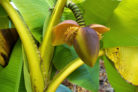
A banana plant takes its sweet time, producing its first flower after 2 to 5 years. These blooms are stunning, featuring decorative bracts in shades of red, brown, or green. In many parts of Asia, the flower bud is actually prepared and eaten as a vegetable! The inflorescence grows out of the “pseudostem” and is so heavy that it eventually hangs downward. Tucked under the bracts, you’ll find rows of flowers. At the very tip of the stalk sits the male flowers, often called the “banana heart.”
The Fruit
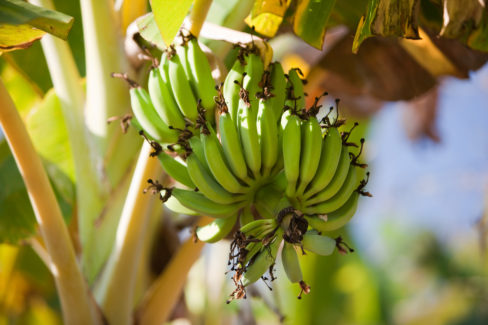
Depending on the variety, bananas can grow up to 12 inches long. A single bunch can hold up to 300 fruits and weigh a whopping 110 pounds! Botanically speaking, bananas are actually berries. The individual fruits are called “fingers” (the word *banan* actually means finger in Arabic), and they grow in groups of 10 to 20, known as “hands.”
Ever wonder why they’re curved? Because the heavy bunches hang toward the ground, the individual fruits try to grow upward toward the sunlight. That struggle for light is what gives them their iconic curved shape.
The Season
It’s hard to imagine a grocery store without bananas. They’re available year-round, mostly traveling to us from large plantations in Central America. They are harvested while still green and then ripened in specialized ripening rooms. If you pick up some green bananas at the store, just leave them at room temperature. Pro tip: put them near an apple to speed up the ripening process!
Nutritional Value
Bananas are a go-to snack for athletes for a reason. With about 88 calories per 100 grams, they are one of the most energy-dense fruits you can find. They’re packed with potassium, magnesium, phosphorus, iron, and zinc. They are also a great source of Vitamin B6, which your body needs for protein metabolism.
Quick Tip: If you buy organic bananas, don’t toss the peels! They make fantastic fertilizer. You can chop them up and mix them directly into your potting soil. Alternatively, boil the chopped peels in water, let them soak overnight, and then dilute the mixture 1:5 with fresh water. Your plants will love this homemade liquid fertilizer!