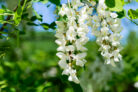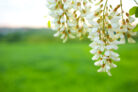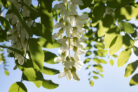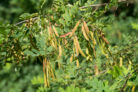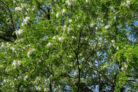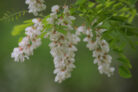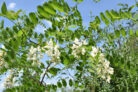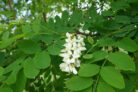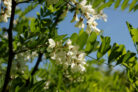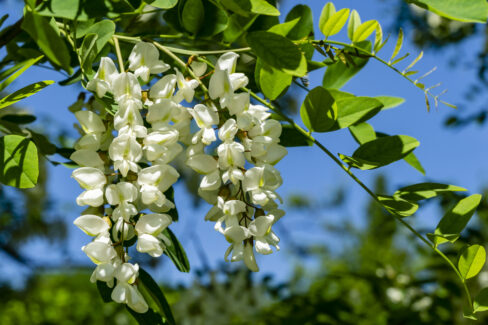
In the early summer, the Black Locust tree transforms into a stunning sea of white blossoms. These flowers aren’t just a feast for the eyes; they’re a vital food source for bees and other pollinators, and they’ve even found a special place in the kitchen. Fun fact: that “Acacia honey” you see at the store? It’s actually made from the nectar of these beautiful blooms.
What Makes These Flowers So Special?
While individual Black Locust flowers are relatively small, they grow in eye-catching, long clusters. Here’s what makes them stand out:
- They are typically bright white, though you’ll occasionally spot some pink varieties.
- The flower stems have a distinct reddish tint.
- Multiple flowers bunch together to form drooping clusters (called racemes) that can reach about 12 inches long.
- They have an incredible, intense fragrance that smells a lot like bergamot.
- They rely on insects for pollination.
When Do They Bloom?
You can expect to see these white flowers blooming in early summer, usually between May and June. Since the leaves are late bloomers too, you’ll often see the fresh green foliage and the white blossoms opening up at the exact same time. During this window, the tree becomes a buzzing hub of activity as bees and other insects stop by for a snack and help with pollination.
How to Use the Flowers
It’s not just the bugs that love the scent and flavor of these blooms! Beyond looking gorgeous in your landscape, Black Locust flowers have plenty of uses around the house and in the kitchen.
A Paradise for Bees and Pollinators
The intense perfume of the Black Locust isn’t just for our benefit—it’s a homing beacon for bees. Because the flowers are packed with nectar, these trees are top-tier pollinator plants. As the insects move from flower to flower, they help the tree reproduce while getting a high-energy meal in return.
The Truth About “Acacia” Honey
The massive amount of nectar these flowers produce is a goldmine for beekeepers. Interestingly, the “Acacia honey” you find on the shelf should technically be called “Black Locust honey.” Since the tree is often called the “False Acacia,” its nectar is the secret ingredient behind that popular, light-colored honey.
Natural Remedies and Herbal Medicine
In the world of natural medicine, Black Locust flowers are known for several healing properties. They are often used for their diuretic, antispasmodic, and mild sedative effects. You’ll find them as key ingredients in natural ointments, creams, tinctures, and even herbal syrups.