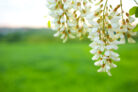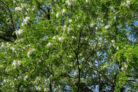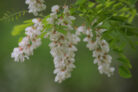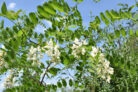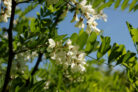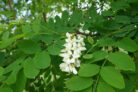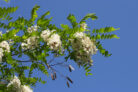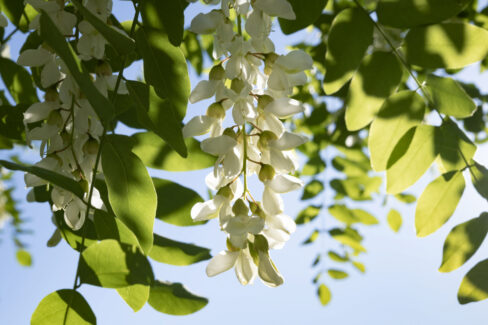
Ever wonder why the Black Locust is often called the “False Acacia”? It all comes down to the leaves! While they look almost identical to true Acacia leaves at first glance, the Black Locust has some pretty unique tricks up its sleeve.
What do the leaves look like?
If you’re trying to identify a Black Locust in your neighborhood, here’s what to look for on the foliage:
- The tops are a lush, deep green, while the undersides have a paler, grayish-green tint.
- The edges (margins) are finely serrated.
- Each little leaflet is oval-shaped and about an inch to an inch and a half long.
- They are “pinnately compound” and grow in an alternate pattern along the branch.
- You’ll usually find up to 19 individual leaflets branching off a single stem.
Watch out for those “thorns”
Here’s a cool botanical fact: the Black Locust has stipules that don’t turn into leaves. Instead, they develop into sharp thorns! These woody spikes are about an inch or two long and usually have a reddish-brown color. Definitely wear gloves if you’re pruning!
Black Locust vs. True Acacia
The nickname “False Acacia” exists for a reason—these two look like twins! However, there is one dead giveaway if you look closely. True Acacias have “even-pinnate” leaves, meaning they always have an even number of leaflets. The Black Locust, on the other hand, is “odd-pinnate.” This means there is always one single, lonely leaflet sitting right at the very tip of the stem.
Fall colors and spring awakening
While the Black Locust is tough as nails in the winter, it isn’t an evergreen. It’s a deciduous tree, meaning it drops its leaves every year. Before they fall, the green canopy turns a brilliant, glowing yellow. Just a heads-up for impatient gardeners: this tree is a “late riser.” It stays bare long after other trees have leafed out, usually waiting until late May to reveal its new growth alongside its fragrant blossoms.
Safety first: The leaves are toxic
As much as we love the look of this tree, keep in mind that it’s a “look but don’t touch” situation for the most part. Every part of the tree, including the leaves, contains toxins. Contact with the sap or leaves can cause skin irritation or allergic reactions for some people, so keep the kiddos and pets away from any fallen debris.
Spotting trouble: Pests and leaf changes
The leaves are like a health monitor for your tree. If you notice strange spots, you might be dealing with pests or diseases. Aphids love these trees, and so does the Locust Leafminer. While these pests usually won’t kill a healthy tree, they can make the foliage look a bit messy with brown or yellow blotches.
One thing you don’t need to worry about? Drooping leaves on a scorching summer afternoon. That’s actually a natural defense mechanism! The tree folds or hangs its leaves to protect itself from the heat. As soon as things cool down in the evening, they’ll perk right back up.