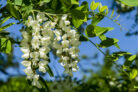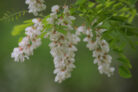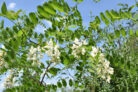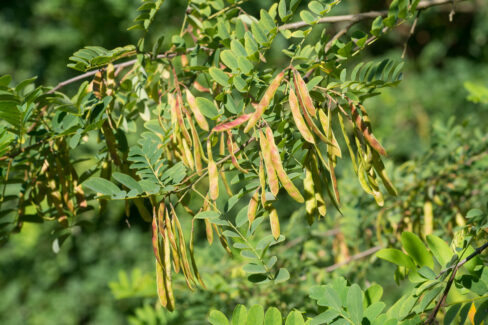
Once the blooming season wraps up, Black Locust trees start producing their signature brown fruits. These are a great way to identify the tree because they stick around all through the winter. It’s not until the following spring that they finally drop, letting the wind carry their seeds to new spots.
The Black Locust: A Winter Stalwart
The fruit of the Black Locust doesn’t just grow high up in the canopy; it’s also incredibly stubborn! Even when the tree is totally bare in the middle of winter, those brown pods stay firmly attached. Because of this, gardeners often call the tree a “winter stayer”—it keeps its look even in the coldest months.
What do the fruits look like?
Since the Black Locust is a legume, its fruit looks a lot like what you’d find in a vegetable garden. Here’s the breakdown:
- They are long, flat pods that can reach up to four inches in length.
- They range in color from a deep red to a dark brown.
- If you pick one up, you’ll notice it feels leathery or like parchment, and they crumble pretty easily in your hands.
How the pods develop
These pods grow from flowers that have been successfully pollinated. No flowers (or no bees to pollinate them) means no fruit. Inside these pods are the seeds needed for propagation, making this stage vital for the tree’s survival and future generations.
Seeds tucked inside
The pods serve as a nursery for the seeds. On average, you’ll find anywhere from four to twelve seeds tucked inside a single pod. Once winter hits and the seeds are fully mature, the pods usually split open along one side to let the seeds out. After that, the withered, empty pods don’t serve much purpose—and just a heads-up, they definitely aren’t edible!
A closer look at the seeds
Inside each pod, you’ll find several seeds that all look pretty much identical. Each little seed has these traits:
- They are tiny, measuring about a quarter of an inch.
- They are brown in color.
- They have a smooth but surprisingly hard outer shell.
How the seeds spread
Because the pods hang so high up, the wind is the primary way they get around. However, compared to the seeds of other deciduous trees, these pods are a bit heavy, so they usually don’t travel very far before hitting the ground. But here’s the cool part: these seeds can stay viable for up to 30 years! That means you might see a new sapling pop up decades after the seed first landed.
Safety first: Fruits and seeds are toxic
Just like most other parts of the Black Locust, both the pods and the seeds are highly toxic. Swallowing them can lead to serious poisoning, including stomach pain, nausea, and vomiting. In extreme cases, these toxic parts can even cause heart failure, which can be fatal for both humans and pets. Always keep an eye on curious kids and dogs around these trees!