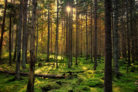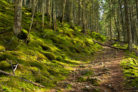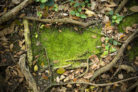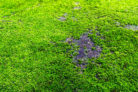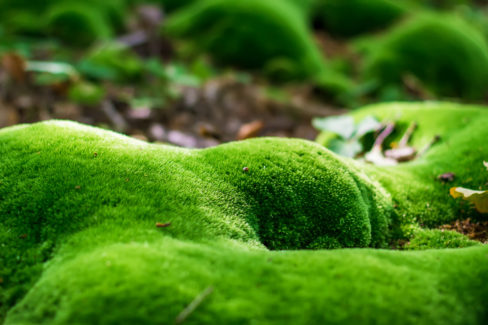
You can find moss just about everywhere—from your own backyard to the edge of the woods and every green space in between. These resilient little plants have been carpeting the planet for over 400 million years! While there are countless varieties out there, they all share a few cool characteristics that make them unique.
What Makes Moss So Special?
Here’s a quick breakdown of the key features that define moss:
- Moss is technically a green, rootless spore plant.
- It evolved from green algae and is generally categorized into three main groups: mosses (bryophyta), liverworts, and hornworts.
- There are up to 20,000 different species of moss, and they’ve been thriving across the globe for roughly 400 to 450 million years.
- When it comes to growth, moss consists of a stem and a multicellular body made of tiny leaves or a “thallus.”
- You won’t see them reaching for the sky; most mosses stay pretty low to the ground, topping out at about 8 inches.
- Moss reproduction is a bit complex, involving an “alternation of generations” using both spores and gametes.
- They absolutely love shady, damp spots with acidic, nutrient-poor, or compacted soil.
Why Moss is Actually Super Useful
Moss isn’t just pretty to look at; it’s incredibly practical for gardeners:
- It works wonders as a ground cover, turning tricky “problem areas” in your yard into lush green carpets.
- Moss acts as a bioindicator. By seeing where it grows, you can learn a lot about your soil conditions without needing a fancy lab test.
- It’s a natural protector! Moss has antifungal and insecticidal properties. In fact, liverwort extract is a great organic way to fight off slugs and fungal infections.
- Specialized Sphagnum moss is a total game-changer for orchids, providing the perfect growing medium.
Plus, moss is the ultimate survivalist. It can handle extreme drought or freezing cold by going dormant, only to “wake up” and start growing again years later once conditions improve.
Moss and the Ecosystem
Moss plays a huge role in nature’s big picture. It provides a cozy habitat for tiny beneficial organisms, birds love using it as nesting material, and it serves as a food source for various insects. Because moss performs photosynthesis even in deep shade, it brings life and energy to the most “unusable” parts of the environment.
The Desert Specialist
Believe it or not, there’s even a desert-dwelling moss called Syntrichia caninervis. It survives in arid climates thanks to tiny, delicate hairs on its leaves that allow it to literally pull microscopic water droplets right out of the air. Nature is pretty amazing, right?