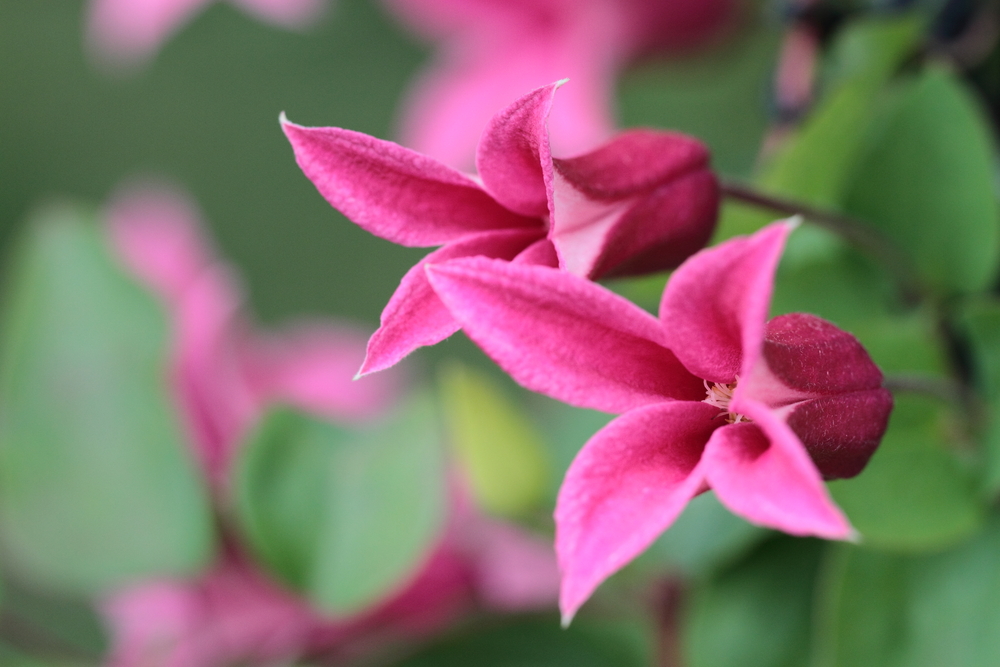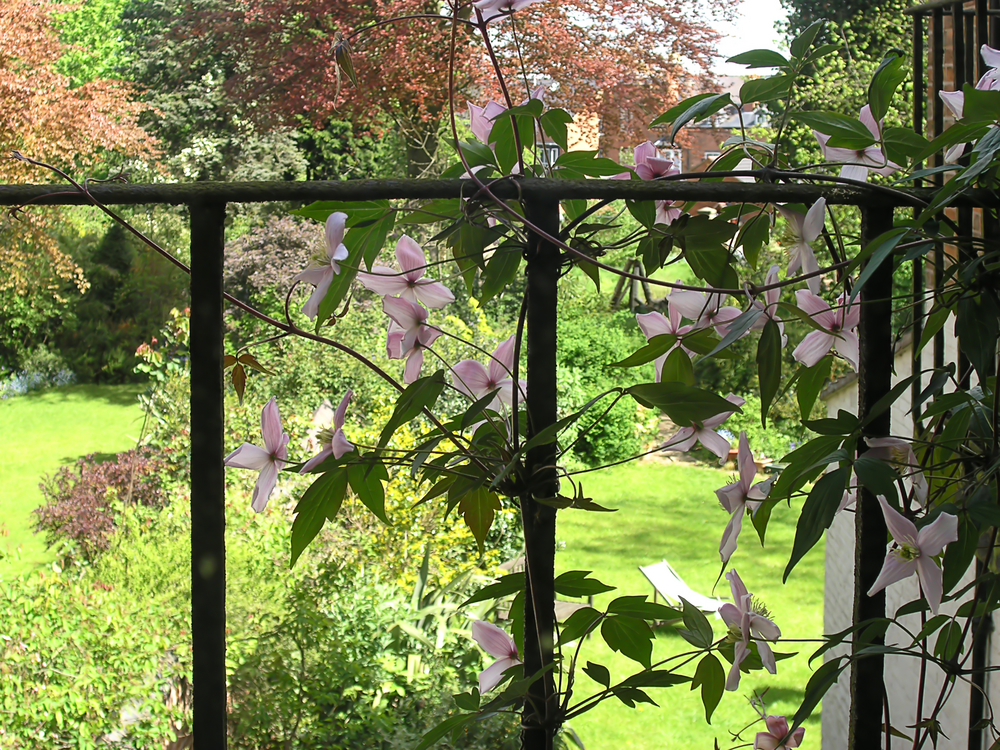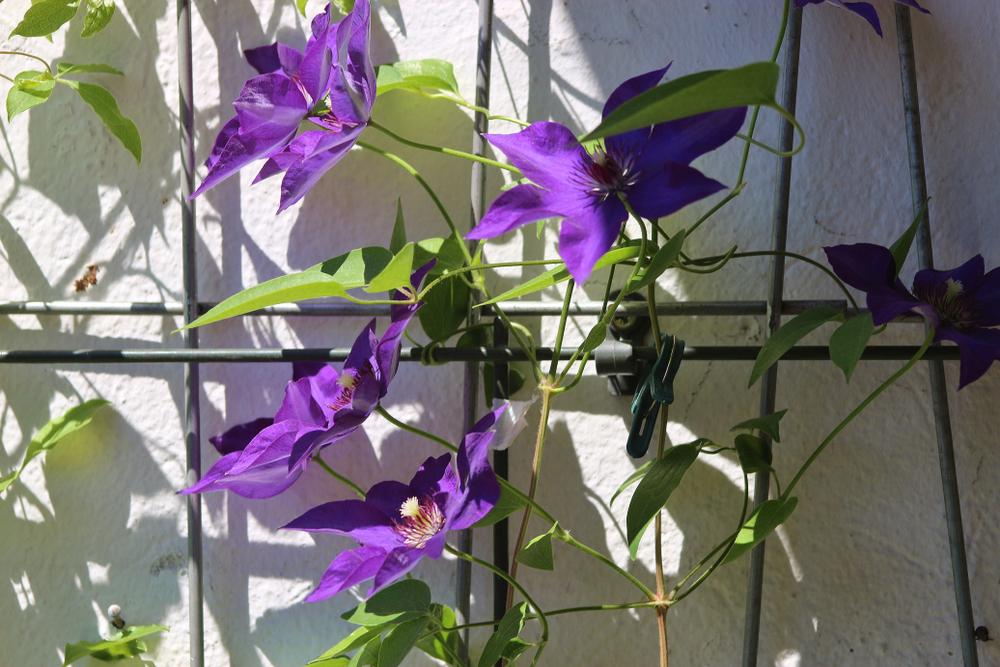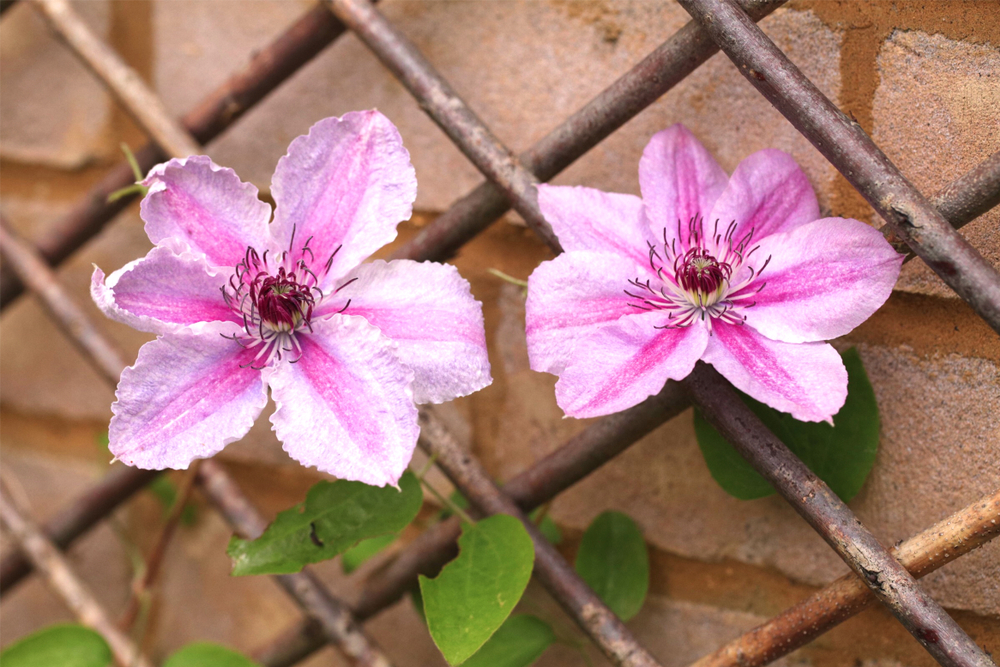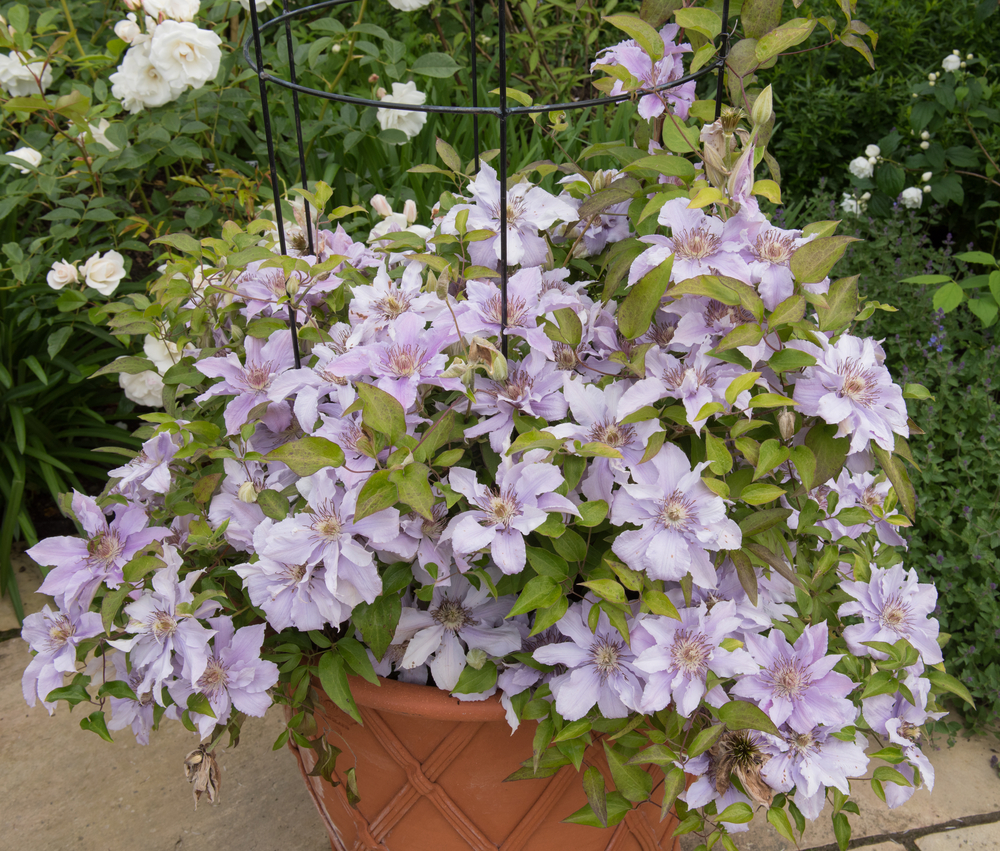
Not everyone is lucky enough to have a sprawling backyard, but don’t let that stop you from gardening! Even if you only have a small balcony, you can still grow some stunning greenery. One of my absolute favorites for small spaces is the Clematis (also known as Virgin’s Bower). While not every single one of the many varieties out there is happy in a container, plenty of them will thrive in a pot if you give them the right TLC.
Here’s the lowdown on how to get your potted Clematis off to a great start.
What You’ll Need
First things first: size matters! To give your Clematis enough room to breathe, you’ll want a container that holds about 7 to 8 gallons (25–30 liters). A pot that size can comfortably house two or three plants. Since Clematis are natural climbers, you’ll also need a trellis. I always recommend wooden trellises over metal ones. Metal tends to heat up and cool down way too fast, which can actually cause “frostbite” on your plants during a cold snap. Lastly, these plants are hungry! Don’t skimp on the dirt—grab a high-quality potting soil packed with nutrients.
Getting Your Clematis in the Ground (or Pot!)
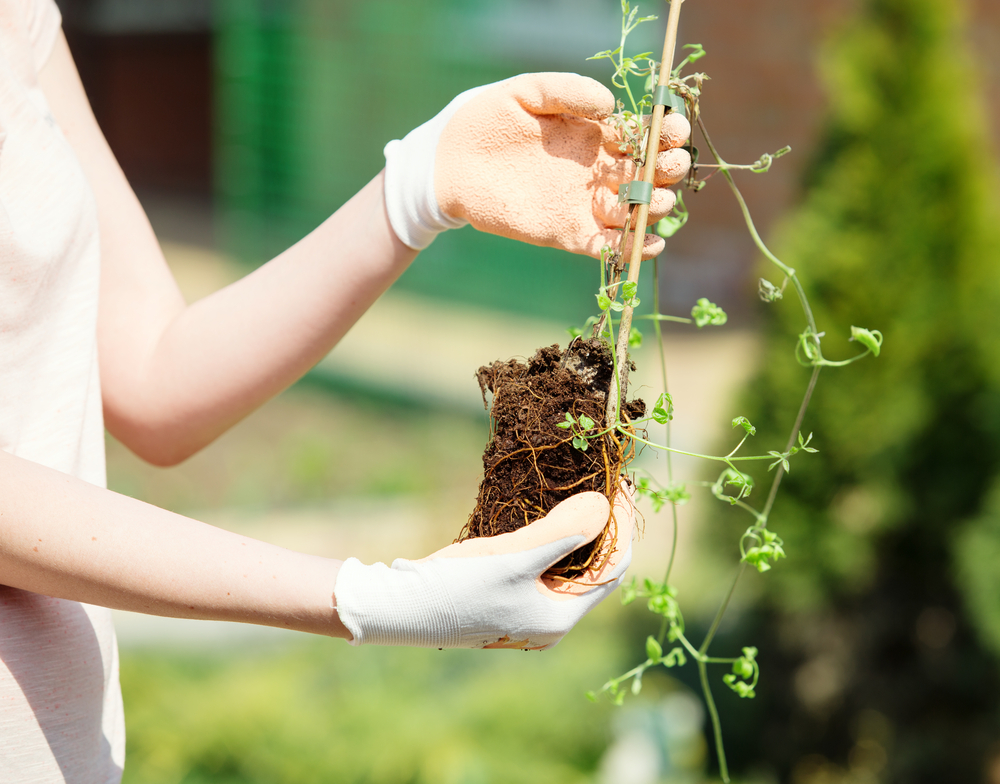
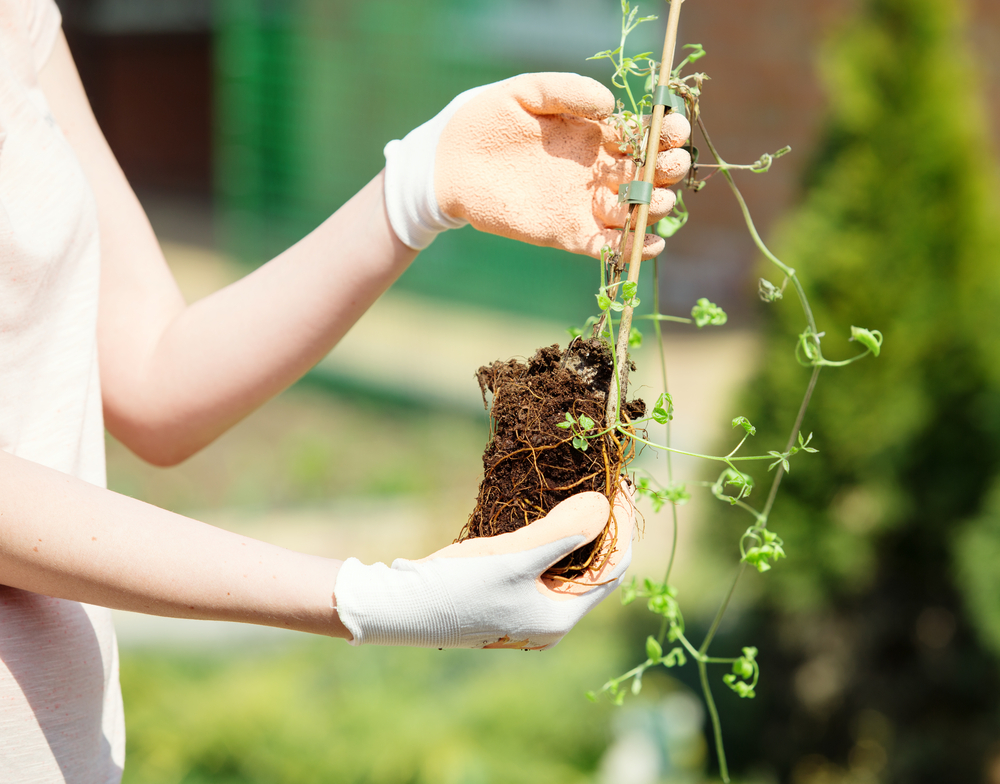
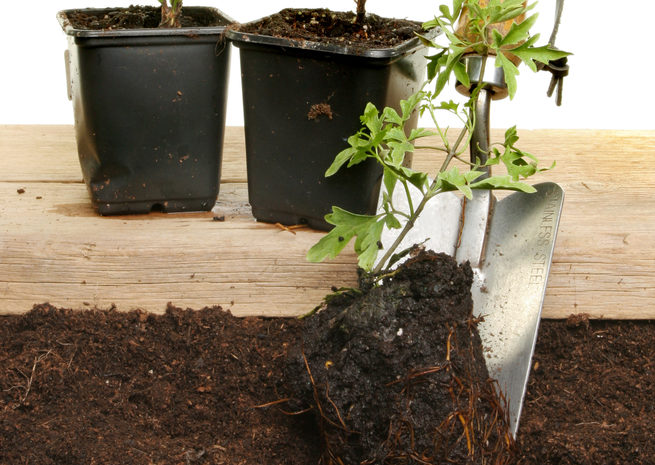
Once you’ve got your gear, it’s time to pick out some young plants from your local nursery. While you *can* technically grow them from seeds, I wouldn’t recommend it for the impatient gardener—they can take up to three years just to sprout!
The biggest enemy of a potted Clematis is “wet feet” (root rot). To prevent this, make sure your pot has drainage holes and add a layer of gravel or crushed stone at the bottom before adding soil. Here’s a pro tip: Clematis love having their “heads in the sun and their feet in the shade.” If your pot is sitting in a sunny spot, plant some low-growing perennials like Coral Bells or Aubrieta around the base to keep the roots cool and shaded from the sun.
Feeding and Maintenance
Even the best potting soil runs out of steam eventually. Clematis are heavy feeders, especially when they are gearing up to bloom. To keep them happy, you’ll want to fertilize regularly. I find that a combo of slow-release fertilizer mixed into the soil and a liquid fertilizer added to your watering can every now and then works wonders.
Don’t forget to give them a light prune occasionally and wrap the pot in horticultural fleece during the winter to protect the roots from freezing. Also, plan on refreshing the soil completely every 2 to 3 years.
To recap, here’s your Clematis success checklist:
- A large enough container (7-8 gallons)
- High-quality potting soil
- A drainage layer of gravel
- Regular fertilizing
By the way, these beauties aren’t just for balconies—they also make a fantastic living privacy screen for a patio!