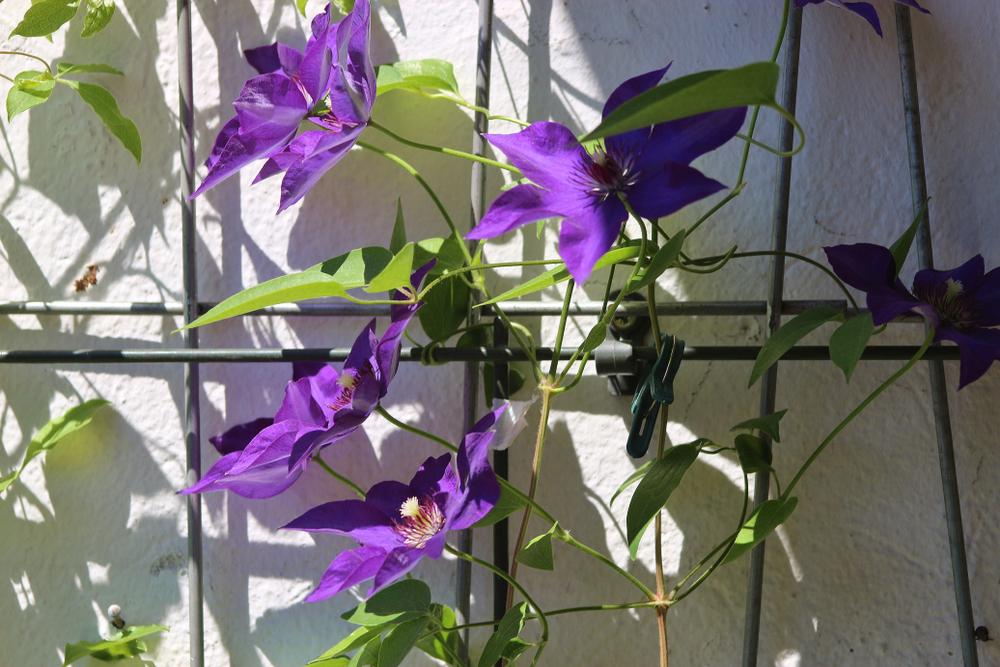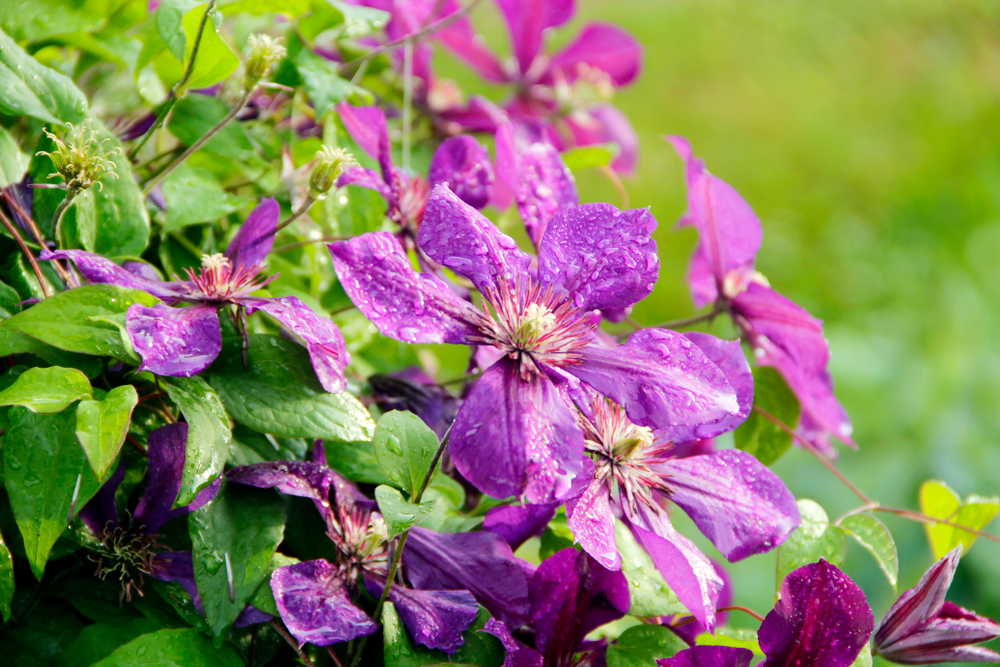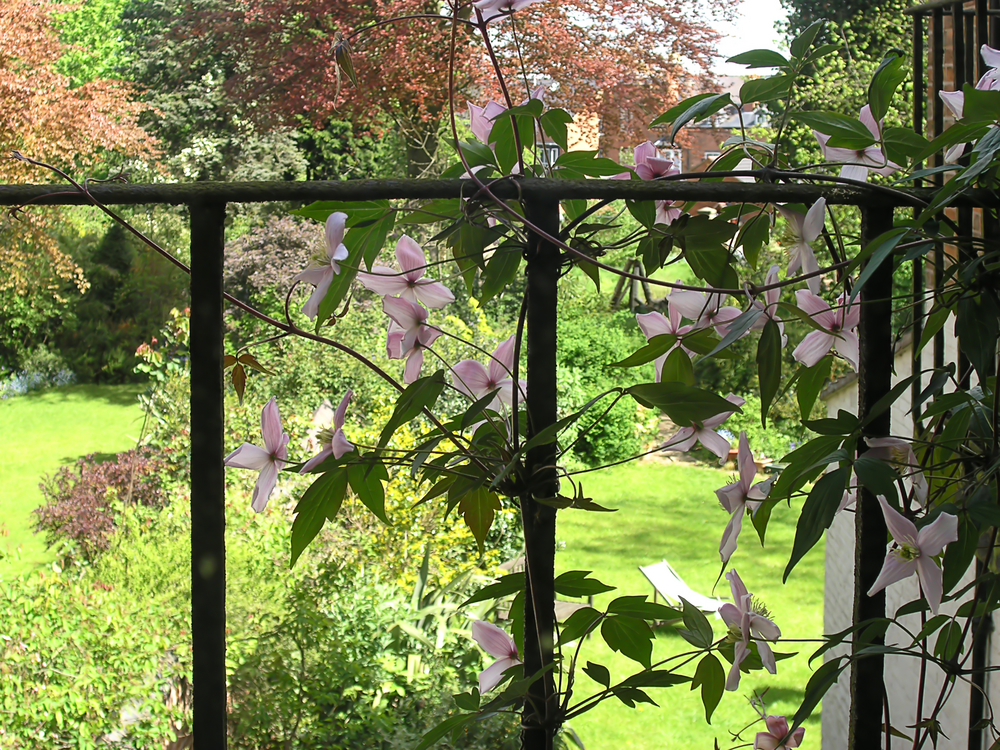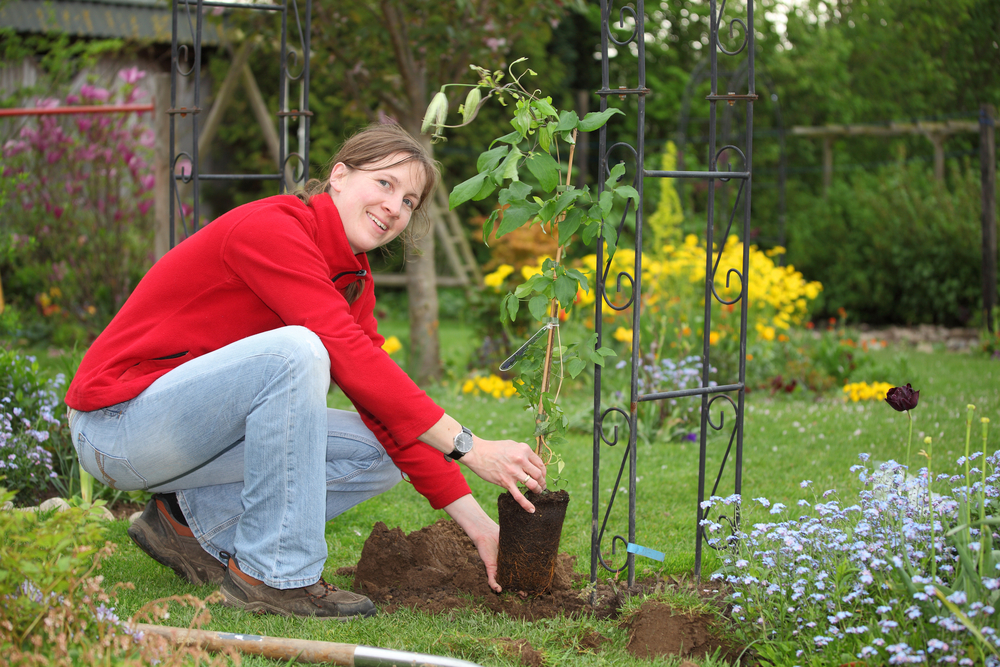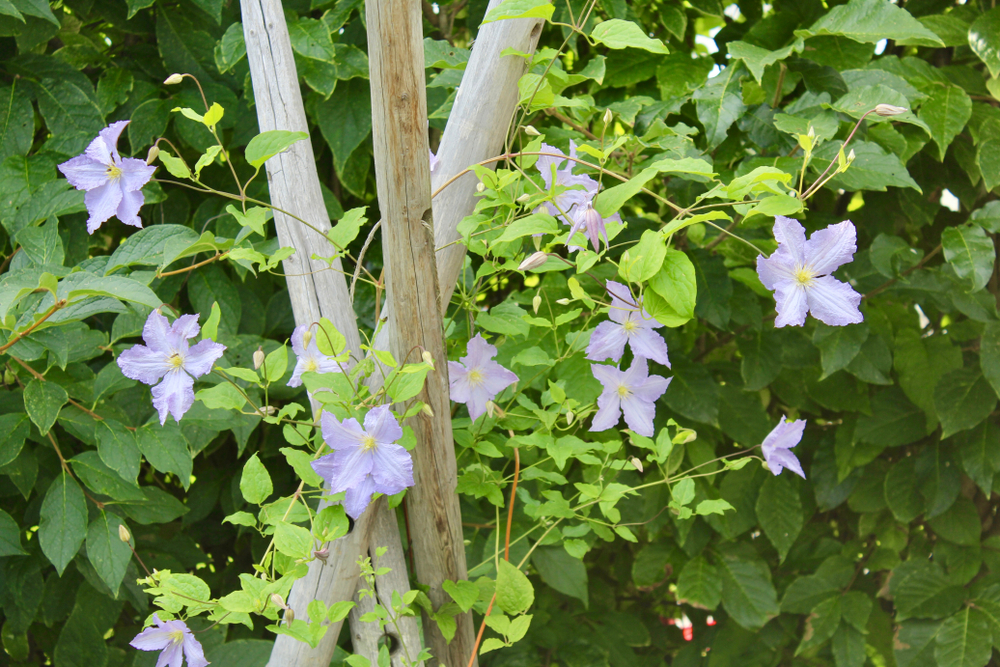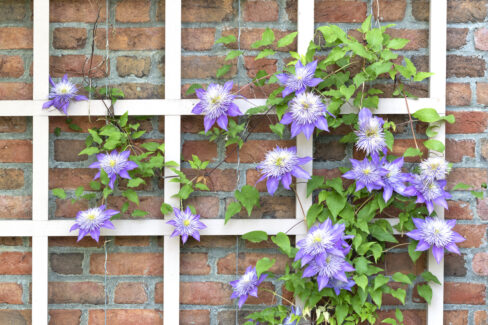
Unlike ivy or Virginia creeper, clematis doesn’t have those little “suction cup” feet to help it stick to walls. Instead, these beautiful bloomers are “leaf-stalk climbers,” meaning they need a little extra help to find their way up. A sturdy wooden trellis is the perfect way to give them that support.
What Makes a Perfect Clematis Trellis?
In the wild, clematis usually scrambles up trees along the edge of a forest. Since most of us don’t have a spare forest in our backyard, we have to provide an alternative. If you want your clematis to scale a wall, a wooden trellis is your best bet. For compact hybrids, a trellis about 6 feet wide and 10 feet tall usually does the trick. However, if you’re planting high-climbing varieties, you’ll definitely want to go bigger.
One pro tip: don’t mount your trellis flush against the wall. You want to leave a gap of about 3 to 4 inches. This allows for plenty of airflow around the plant, which is the best way to prevent your clematis from catching nasty diseases like clematis wilt.
DIY Guide: Build Your Own Trellis
If you’re feeling handy, building your own trellis is a fun weekend project. I recommend using rot-resistant woods like larch, oak, chestnut, or black locust. They’re easy to work with and look gorgeous against the lush green foliage. If those aren’t available, standard softwoods work just fine too.
Tools and Materials for Your Clematis Trellis
First, you’ll need several wooden posts to serve as the horizontal crossbeams—aim for a thickness of about 1×1 inch. You’ll also need wooden slats for the vertical lattice. To mount it to the wall, pick up some trellis wall anchors (you can find these easily online or at your local hardware store).
As for tools, you just need the basics: a hammer, a cordless screwdriver, and a drill. I’ve found that self-tapping screws work best for securing the wood pieces together.
Step-by-Step Assembly
Since clematis climbs by wrapping its leaf stalks around things, it really loves a classic grid pattern. Here’s how to put it all together:
- Depending on how high you want to go, mount two, three, or more horizontal crossbeams to your wall using the trellis anchors.
- Make sure the anchors are driven in about 8 to 12 inches for stability.
- Attach your vertical slats to the crossbeams using your screws. Space them evenly—I’d recommend at least 4 inches apart to give the vines room to breathe.
Extra Tip: Make sure your wall anchors are long enough to maintain at least a 2.5-inch gap between the trellis and the house. Your clematis will thank you for the extra breathing room!