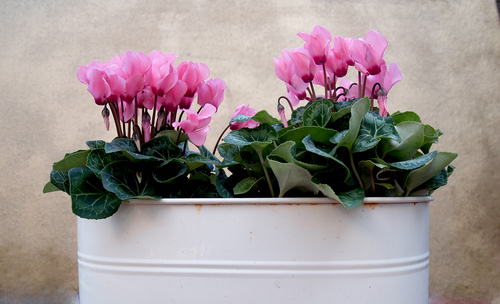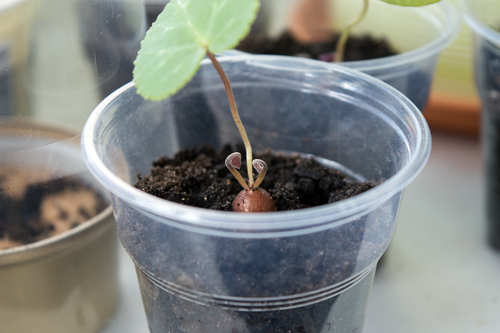
The beautiful flowers and leaves of the cyclamen all sprout from one central powerhouse: the thick tuber that sits just slightly above the soil line. Think of this tuber as the plant’s heart—without it, the cyclamen simply can’t survive. That’s why giving it a little extra TLC is the secret to a happy plant.
What does the tuber look like?
The tuber is a bit flat with a rough, brownish surface. On the bottom, you’ll find the roots, which act like straws, soaking up nutrients and sending them straight to the tuber. The tuber then stores all that energy and doles it out slowly, which is how the cyclamen manages to bloom for weeks on end! Once the flowering season is over, the tuber needs a “nap” to recharge its batteries. During these dormant weeks, you can skip the fertilizer entirely.
How to plant your cyclamen tuber
The best time to get your cyclamen in the ground is either early summer or fall. If you’re planting a hardy variety outdoors, here’s the game plan:
- Loosen up the soil and dig a hole that’s plenty big enough for the tuber.
- Mix in a little bit of mature compost to give it a head start.
- Give the tuber a quick soak in water.
- Check for the old root remains to figure out which side is which.
- Place the tuber in the hole with the rounded side facing up (roots go down!). It should be about 2.5 inches (6 cm) deep.
- Cover it with soil and give it a good watering.
If you’re planting a cyclamen in a pot, follow the same steps, but make sure the top 1/3 of the tuber is actually peeking out above the soil.
Heads up! The tuber is toxic
As much as we love them, cyclamen tubers—along with the leaves and flowers—contain cyclamin and saponins. These substances can be very dangerous, and even fatal, for humans and pets. Keep these plants away from curious kids and make sure your furry friends don’t try to take a bite. If a pet does manage to snack on a cyclamen, watch out for these symptoms:
- Nausea
- Dizziness
- Vomiting
- Paralysis
Just 8 grams of cyclamen can be a lethal dose, so if you suspect your pet has eaten any part of the plant, get them to a vet immediately.
Using the tuber for propagation
If you have a large, healthy tuber, you can actually use it to grow new plants! Just use a clean, sharp knife to slice it in half. The trick is to make sure each half has at least one growth bud. Plant your new sections in rich, organic soil in a spot with partial shade, and you’re good to go.