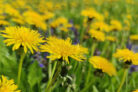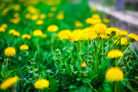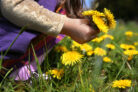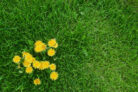
Dandelions go by many names—puffballs, lion’s tooth, or even “yellow snow” in some parts. As a wild plant that grows like a weed, it often puts a lot of pressure on American homeowners because it’s notoriously tough to get rid of. In this guide, I’m going to break down whether dandelions are annuals or perennials so you know exactly what you’re dealing with in your yard.
Annual, Biennial, or Perennial: The Dandelion’s Unique Nature
Here’s the interesting thing about dandelions: they can actually be both annual and perennial. While some plants finish their life cycle in a single season, many specimens reach a second year and bloom all over again. However, this yellow member of the aster family doesn’t live forever; usually, three years is the absolute max for a single plant.
The lifespan of your local dandelions depends mostly on their location and environment, as well as the quality of the soil. The specific variety of dandelion also plays a big role in how long it sticks around.
A Frost-Hardy Survival Artist
In most of our US climate zones, frost and freezing winter temperatures are no sweat for a dandelion. Even though the leaves die back during the dark, cold months, that long, sturdy taproot is built for survival. This root hunkers down in the soil all winter and pushes out new growth as soon as spring hits.
Quick tip: If you happen to be growing dandelions in a pot (maybe for some homegrown greens!), make sure to move the container against a sheltered wall during winter and wrap the base with some garden fleece to protect the roots from deep freezes.
It All Starts with the Rosette
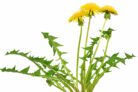
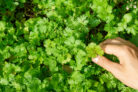
If a dandelion successfully makes it through the winter, new leaves will sprout from that deep taproot—which can grow up to three feet long!—once spring arrives. This foliage forms a “rosette” shape (a circular cluster of leaves) that defines the dandelion’s look throughout the early season.
You’ll usually see those little leaves popping up as early as March if it’s warm enough. The foliage is long and heavily jagged or “toothed.” Once the blooming period kicks in, the plant sends up a hollow stalk that can shoot up to 24 inches high.
Flowers & Seeds in the First Year
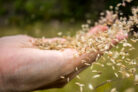
Dandelions don’t waste any time; they produce flowers in their very first year of life. Typically, the peak bloom happens between April and May. You’ll usually see a second, smaller bloom later in the summer, too. The seeds, which stay viable for a long time, develop just a few weeks after the flower fades. This means a dandelion can germinate, grow, and spread its seeds all within a single year!