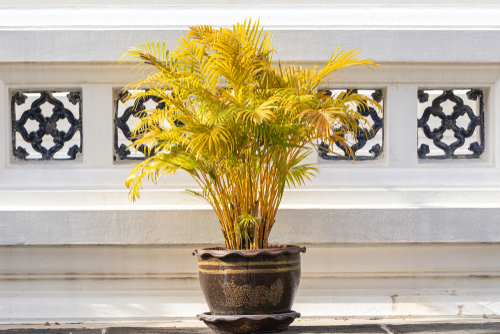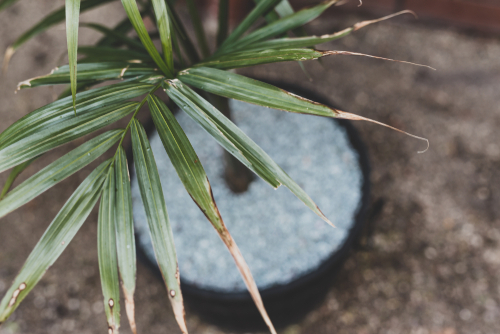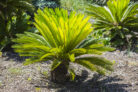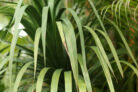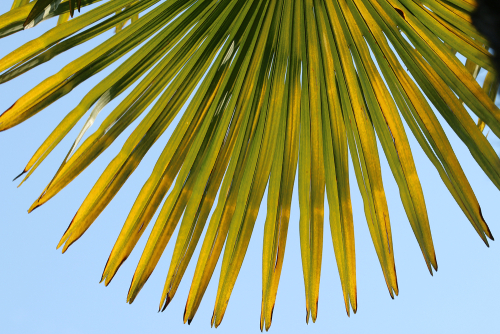
It’s totally normal for a Fan Palm to drop an old leaf here and there, but if you notice several fronds turning yellow all at once, your plant is trying to tell you something is wrong. To get your palm back to its lush, green self, you’ll need to do a little detective work to find the culprit.
Why are the leaves turning yellow?
To figure out why your palm leaves are yellowing, you’ll want to go through a quick checklist of its care routine.
Common causes include:
- Not enough light
- Overwatering or underwatering
- Low humidity
- Nutrient deficiencies
- Old, compacted soil
- Pest infestations
Finding the Right Spot
Fan Palms are sun-lovers! They need plenty of light year-round—ideally 4 to 6 hours of direct sunlight every day. During the dark winter months, they often struggle with light deficiency. If your home is a bit dim, a specialized grow light can be a real lifesaver for your plant.
Balancing the Water
Fan Palms are a bit like Goldilocks when it comes to water—they don’t like too much or too little. If the soil is soggy, the roots will rot; if it’s bone-dry, the roots shrivel up. Either way, the plant stops getting the nutrients it needs. To prevent “wet feet,” always use a pot with drainage holes and add a layer of gravel or clay pebbles at the bottom.
The golden rule? Water when the top inch (about 3 cm) of soil feels dry. Give it a good soak until water runs out the bottom, then wait about 30 minutes and dump any excess water from the saucer. Also, palms can be sensitive to hard water, so try using filtered water, rainwater, or let your tap water sit out overnight before using it.
Keeping Humidity High
Since Fan Palms are tropical natives, they crave high humidity. If the air is too dry, those leaves will start to yellow. You can help your palm out by misting it regularly, setting up a pebble tray with water, or running a humidifier nearby.
Feeding Your Palm
Both too little and too much fertilizer can cause discoloration in the fronds. During the active growing season, your palm needs a steady supply of nutrients. Use a balanced palm fertilizer and follow the instructions on the label to make sure you aren’t overdoing it.
Refreshing the Soil
If it’s been years since you last repotted, the soil might be compacted or totally depleted of nutrients. When the soil gets too dense, the roots can’t “breathe” or absorb food properly. If this is the case, it’s time to move your palm into a fresh batch of high-quality palm potting mix.
Dealing with Pests
Keep a close eye out for spider mites, especially during the winter when the heat is on. It’s a good idea to check your plant thoroughly before the spring growing season kicks in. If you spot these tiny pests, give your palm a gentle “shower” to wash them off, then wipe down the leaves with a cloth dipped in a bit of rubbing alcohol. If the infestation is really stubborn, you might need to pick up an organic insecticide to get things under control.